
Snohomish County moves to defund drug kits and kill Housing First. Nehring explains why the model was never going to work
Snohomish Councilmember Nate Nehring explains why Housing First is a misnomer for fentanyl addiction and why harm reduction enables addicts rather than helps them recover.

Hoping to not become Seattle, Snohomish County Councilmember Nate Nehring introduced four ordinances to tackle homelessness. (Jason Rantz/Seattle Red)
(Jason Rantz/Seattle Red)
Snohomish County Councilmember Nate Nehring hopes to change the failed policies of Housing First and harm reduction. They have produced the crisis they were supposed to prevent, he noted, and has four new ordinances he hopes to turn the tide on homelessness.
Nehring’s introduction of a four-bill package targeting Snohomish County’s approach to homelessness, drug paraphernalia distribution, and fentanyl exposure of minors was introduced this week. Now, he’s explaining on The Jason Rantz Show on Seattle Red 770 AM why now is the time to make these changes.
Housing First was designed for a different problem
His critique of Housing First started with the basic mismatch the model’s defenders never want to answer.
“I think housing first works well for somebody who is a victim of domestic violence, or, you know, is in a situation of financial instability, but when you’re deep in the throes of a fentanyl addiction, where you’re at risk of overdose death imminently, I think it’s a misnomer to say, well, this person just needs housing,” Nehring explained. “Clearly, the root cause of this person’s homelessness is a drug addiction or a mental health disorder or the combination of the two.”
He pushed back on the model’s central compassion claim just as directly.
“If all we’re really doing is saying, well, let’s get this person off the street because they’re an eyesore and put them in the shelter, we’re not really solving the problem if they’re continuing to abuse fentanyl or meth or whatever the drug of choice is,” Nehring said. “We have to get at that root cause if we want to truly solve the problem and recognize that that person has God-given dignity and is deserving of a life, a healthy life, a sustainable lifestyle. We have to meet them where they’re at and not just say, well, we’ll put you in housing. We won’t care about your addiction. You can keep using. I don’t think that that’s compassionate. I don’t think that’s acceptable.”
Very few results to show for Housing First
The outcomes across the region have made the argument for him.
Snohomish County’s homeless count remains above 1,100 with federal funding increasingly uncertain, and no real dent in the addiction crisis underneath the numbers.
“We’ve seen housing first used throughout the Puget Sound in these areas, and drug overdose deaths haven’t gone down, homelessness hasn’t gone down,” Nehring said.
Spokane is living through the same reality. Councilmember Jonathan Bingle has described Housing First placements producing parts of that city that now resemble slums.
Harm reduction gives cover to the addiction, not the addict
On drug kits and the broader harm reduction apparatus, which aims to make illicit drug use “safer” for the addict, Nehring offered credit for intent and nothing for results.
“I’ll give people the benefit of the doubt and say it’s well intentioned,” he said. “I think the goal is to try to, from their perspective, make it as safe as possible to consume drugs. I just don’t think that that is the right approach. I think that it oftentimes, more often than not, is just enabling the drug addiction and causing this person to continue struggling with this issue, and I think a much better approach is to say, let’s give these people an option. You can go into treatment, or you’re going to be held accountable, whatever that means. If there’s crimes being committed, then maybe you’re being put in jail. But to give people the paraphernalia to continue abusing drugs and poisoning themselves can’t be the solution. I don’t see the compassion there, even if it’s well intended. I don’t think it’s a good approach, and I don’t think it’s working. And so this ordinance would say that no county tax dollars could be used to purchase and distribute drug paraphernalia.”
Snohomish County had already moved against one piece of this problem years earlier. When there was serious talk of opening heroin injection sites in Seattle, the county put a land use ban in place blocking them from locating anywhere within its borders. The new ordinance would cut off the paraphernalia pipeline that runs through public health agencies and nonprofits.
Drug kits handed out across the Puget Sound have included fentanyl pipes, foil, and instructions for use, often with no mention of treatment services in the package.
The real argument about ‘compassion’
When asked how he answers critics who frame any accountability measure as punishing addicts for being poor, Nehring pushed the premise back.
“You have to have compassion and accountability,” he said. “Unfortunately, there’s this misnomer that compassion says, well, somebody wants to live in a tent and do open air drug use and defecate on the streets. Compassion is just letting them live their life, and I don’t see that at all. I think there’s nothing less compassionate than that approach, which is what you see out of Seattle and some of these other urban places.”
He got specific about what that actually means in practice.
“I think true compassion is meeting someone where they’re at and working with them to get clean, to get sober, to get healthy, so that they can live a dignified life,” Nehring added. “If they’re deep in the throes of a fentanyl addiction, their brain’s been chemically altered, they’re not in a position where they can make good, long-term health decisions for themselves. Maybe they’re committing crimes, and accountability means making an arrest, putting them in jail, where maybe that’s the opportunity for them to get detoxed a little bit, to get their head clear, where they can make good decisions for themselves. So I think true compassion requires having accountability, and without any sort of accountability, there really isn’t a motivation for people to want to get better.”
The four ordinances head to committee in the coming weeks. A public hearing and final vote are expected within one to two months.
Listen to The Jason Rantz Show on weekday afternoons from 3 p.m. – 7 p.m. on Seattle Red on 770 AM (HD Radio 97.3 FM HD-Channel 3). Subscribe to the podcast here. Follow Jason Rantz on X, Instagram, YouTube, and Facebook.
Related
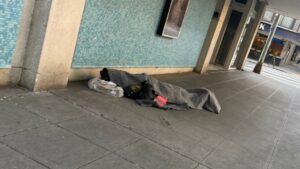 Snohomish councilmember introduces four bills to end Housing First, defund drug kits, shield kids from fentanyl
 Mukilteo council scales back performative land acknowledgments to once a month, 4-3
 Port of Port Townsend quits Facebook and Instagram, calls platforms 'host-destroying parasites'
 Rantz: Lynnwood councilwoman says American flag 'unrelatable,' wants Pride flag in its place
 Seattle homeowners turn to barbed wire to protect from dangerous homeless encampments
 From Port Orchard to Walla Walla, 17 groups split $45 million for homeless veterans
Comments
1 Comments
We stated 17 years ago that continuing to fund non profits for the votes they can bring to the elected is a losing agenda for the taxpayers. Today we see this truth. And everyone of our elected has used their position to create legal obstacles, using those non profits they are funding, for me and our programs. I guess this Civic Assembly is nothing more than party members! How many homeless on committee, randomly selected from what list? When govt creates the committee instead of WE THE PEOPLE then we can guarantee that any information we receive will be a biased report. Perjury, death threats, tampered evidence all things now being allowed in the Snohomish County Courts with Sno Co Councils knowledge, with some police recommending criminal charges against elected for perjury, only to be denied by Prosecutors!
These committees are nothing more than a show. Details are the truth! Think of these comments...Drugs cause bad decisions to be made is what officials say which is why treatment is necessary. A drug helps contribute to bad decisions and we now want to take your children away from you and put you in jail? Accountability is needed with smart decisions from our elected. Obviously the decisions these Sno Co elected, for how many years now, has done nothing except give money to these non profits who do nothing except provide votes for the electeds financial support!
Term limits.. Stop funding non profits that promote homelessness!