
Mukilteo council scales back performative land acknowledgments to once a month, 4-3
Mukilteo City Council voted 4-3 to read its land acknowledgment monthly, not before every meeting, overruling DEI Commission pressure and tribal opposition.

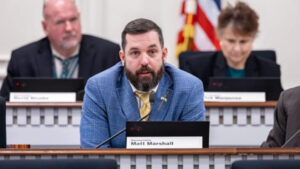
The Mukilteo City Council meets in special session Monday to vote on its land acknowledgment policy. The council split 4-3 to reduce the ritual to once a month — a half-measure that critics argue doesn't go nearly far enough. (City of Mukilteo)
(City of Mukilteo)
The Mukilteo City Council voted 4-3 on Monday to stop reading a land acknowledgment before every meeting. The majority concluded that once a month is enough for a statement that has divided residents since its adoption and that a sizable portion of the public views as progressive performance.
The council adopted the practice in 2022 following a recommendation from the city’s DEI Commission. It was a push that came after the George Floyd and Black Lives Matter rallies and riots. House Speaker Laurie Jinkins tried a similar move at the state level, opening the legislative session with one while signaling she’d like to make the pandering more official.
Resident who pushed back gets partial vindication
Sharon Damoff had been showing up to council meetings to argue against the practice for some time, according to KING 5. Her case against it isn’t particularly complicated.
“I think land statements are part of a broad movement to undermine America,” Damoff told KING 5. “It’s intended to make it sound like we’re a bad country. We’re a good country. We’ve brought liberty and prosperity to millions. I think it’s intended to delegitimize our country.”
The Tulalip Tribes pushed back on the reduction. Tribal Chairman Hazen Shopbell argued to KING 5 that the acknowledgment reflects “a government-to-government relationship founded on respect, integrity and responsibility.” He added that the Tribes see the statement as foundational rather than ceremonial.
“We see land acknowledgments as a starting point for more meaningful interactions and government-to-government relationships,” he noted. “Tulalip will continue to work toward good interactions with the governments and communities in our territories.”
A George Floyd-era gesture meeting its expiration date
The city’s DEI Commission voted in 2021 to formally recommend the acknowledgment. The full council approved it in 2022. That timeline coincided with the far-left cultural pressure campaign that swept through government institutions following the Floyd rallies and riots.
Land acknowledgments have spread across Washington despite doing nothing concrete for Native communities. They cost nothing, change nothing, and commit governments to nothing. That’s the point. They are a way for officials to perform solidarity without spending a dime or passing legislation that actually improves conditions on reservations.
The University of Washington made that dynamic clear when it punished a professor for writing a parody land acknowledgment in his course syllabus, a case the Ninth Circuit eventually resolved in his favor, as MyNorthwest reported during the extended legal fight.
Follow Seattle Red on-air at 770 AM, on the Seattle Red app, and streaming audio and video on SeattleRed.com.
Related
 Thurston County Sheriff's I-5 AK-47 stop ends with a warning, and a lesson for gun owners who happen to be felons
 Chris Cargill: Who’s getting the Idaho parental choice tax credit - and why is the application window reopening?
 Former MLB star Mark Teixeira goes viral blasting Seattle's liberal policies on X
 Seattle high school allegedly warns students not to skip class as Grand Theft Auto VI finally hits consoles
 Pramila Jayapal earns bipartisan condemnation for ‘racist’ attack on Hakeem Jefferies
 Rep. Matt Marshall says the firm hired to save Washington’s girls’ sports law has been on the wrong side every time
Comments
0 Comments