
New book reveals Bryan Kohberger’s defense nearly tossed the prosecution’s star evidence
A new book reveals Bryan Kohberger's defense had a credible case to suppress the Ka-Bar knife sheath — the prosecution's most critical physical evidence.

Bryan Kohberger is escorted into a Latah County, Idaho courtroom during proceedings in the 2022 murders of four University of Idaho students. He pleaded guilty in July 2025, receiving four consecutive life sentences. (Photo by Zach Wilkinson-Pool/Getty Images)
(Photo by Zach Wilkinson-Pool/Getty Images)
A new book on the Bryan Kohberger case reveals that his defense had a credible argument to throw out the prosecution’s most important piece of physical evidence before Kohberger ended the proceedings with a guilty plea last July.
“Broken Plea: The Explosive Search for Truth Behind the Idaho Murders,” by former FBI Hostage Rescue Team member Christopher Whitcomb, draws on expert reports and case materials that were never presented publicly in court. Fox News Digital was first to report the details.
Book surfaces chain of custody problems with sheath
The book zeroes in on the Ka-Bar knife sheath recovered from victim Madison Mogen’s bed.
Defense forensic expert Brent Turvey, a criminologist who has testified in more than 70 trials, raised concerns about how the evidence bag was documented. The bag appears to have been filled out twice, once on the bag itself and again on a sticker affixed to the front. Six recorded custody exchanges spanning Nov. 13 to Nov. 16, 2022, were apparently logged on the label with the same pen in similar handwriting.
“The problem is a chain of custody form is supposed to be something that is created live,” Turvey told Fox News Digital. “So, if I take a bag of evidence and I retrieve it, I sign that I’ve retrieved it, put my signature on it, the date, you know, that kind of stuff.”
“If this had gone to trial, this piece of evidence should have, by any competent jurist, been ruled inadmissible,” he added. “In most cases, in most jurisdictions, it would be.”
Serious consequences in chain of custody?
Whitcomb spelled out what losing that evidence would have meant for the case.
“It is plausible for someone to argue that the chain of custody would have led to significant problems for the prosecution in presenting evidence of any kind of DNA, and if that were to be excluded, then you have a white car and you have the cell tower pings,” he said. “I would say, fundamentally, looking at this case fundamentally, that problem is the biggest problem the prosecution would have had.”
Paul Mauro, a retired NYPD inspector and Fox News contributor, reviewed the bag images and was less alarmed. He argued the chain of custody challenge looks more like a procedural attack than a genuine blow to the case, the kind of move defense attorneys make when the underlying facts leave nothing else to work with.
Untested hair points to unresolved questions
Whitcomb also surfaced a strand of hair photographed at the crime scene near victim Ethan Chapin’s hand that, to his knowledge, has never been tested or processed. The FBI lab excluded Kohberger as its source.
“The FBI lab said Kohberger is excluded,” Turvey said. “This is not his hair.”
No one has identified who it belongs to.
Kohberger, a former Washington State University doctoral student, pleaded guilty to the November 2022 stabbing deaths of Mogen, Kaylee Goncalves, Xana Kernodle, and Ethan Chapin. He received four consecutive life terms and forfeited his right to appeal. He has separately been fighting paying restitution to the victims’ families while collecting outside donations in prison, as SeattleRed previously reported.
Follow Seattle Red on-air at 770 AM, on the Seattle Red app, and streaming audio and video on SeattleRed.com.
Related
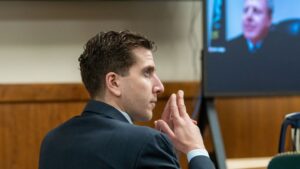 Idaho moves to block criminals like Bryan Kohberger from profiting off notoriety
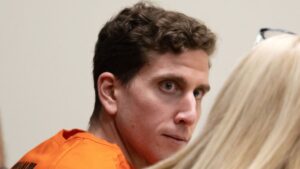 Bryan Kohberger’s drug addiction past revealed as sister speaks out after guilty plea
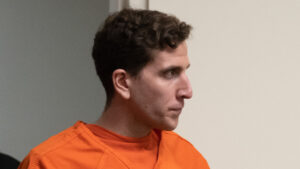 Convicted killer Bryan Kohberger reportedly tries befriending serial murderers
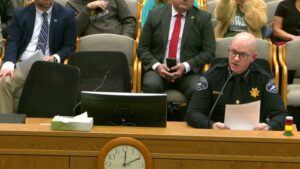 Sheriff Keith Swank says ‘reasonable and necessary no longer apply’ if anyone tries to harm his family
 Rantz Exclusive: Seattle police recruit pipeline drops to 51 as officer departures hit 94, pacing to exceed 2025 separations
 Seattle already blew past its $800,000 break-in repair baseline, and the council wants another $1 million
Comments
0 Comments