
Pierce County city flips its crime cameras back on after nine months dark under Democrat surveillance law
Bonney Lake police turned their Flock license plate cameras back on after nine months dark under Washington's new Democrat-written surveillance law, SB 6002.

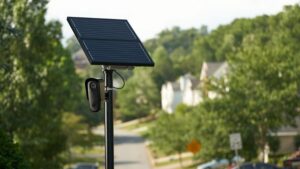
Bonney Lake police reactivated 22 Flock license plate cameras on Aug. 31 after shutting the network down for nine months to comply with Washington's new surveillance law. (Photo by Justin Sullivan/Getty Images)
(Photo by Justin Sullivan/Getty Images)
Bonney Lake police have switched their license plate cameras back on after nine months in the dark, making the east Pierce County city one of the few Washington agencies to claw its way back under a Democrat-written law that pushed departments across the state to pull the plug entirely.
Police Chief Mark Berry reactivated the department’s 22 Flock Safety automated license plate recognition cameras on the morning of Aug. 31, he told The News Tribune. Berry had shut the network down in mid-December, months before the restrictions took effect, so his officers would not be caught on the wrong side of a statute that turns paperwork errors into criminal behavior.
The cameras are perched along roadways at major intersections on State Route 410 and near Allan Yorke Park.
A law that sent Washington police cameras dark
Senate Bill 6002, branded the Driver Privacy Act and signed by Governor Bob Ferguson in March, restricts officers to using the cameras on vehicle theft, missing persons, felonies and gross misdemeanors. It bars them from immigration enforcement, limits where the cameras can be mounted, caps data retention at 21 days and imposes annual reporting requirements. Violations can be charged as gross misdemeanors against individual officers.
Berry wanted a look at the finished product before risking it.
“I wanted to wait to see the new legislation,” Berry said. “I wanted to make sure we could meet the requirements.”
What Bonney Lake can still use the cameras for
Berry also waited until Flock built in safeguards covering the outside agencies that share data with his department, including a requirement that every vehicle search be tied to an active incident with a stated reason. He opted into audit assistance and the ability to cut off access after an unauthorized search.
“If an officer from another agency were to try to do a search that did not have a case number, they would not be able to do so,” Berry said.
Officers can run searches on 20 categories of offenses, from animal cruelty and threats up through human trafficking and terrorism. A camera hit only associates a vehicle with a suspected crime, and the information has to be run through a separate database before anyone gets arrested. Berry pointed to four cases his department has already worked with the technology, including a narcotics burglary at a pharmacy, a hit-and-run, an outstanding sexual assault warrant and the arrest of a child pornography suspect.
“We use them very specifically to solve crime,” Berry said.
Pierce County still has no cameras of its own
The Pierce County Sheriff’s Office remains without a license plate camera network. Sheriff Keith Swank deactivated his entire system after Ferguson signed the bill, calling the restrictions impossible to comply with in the field. Spokane County Sheriff John Nowels followed days later, citing vague statutory language and the criminal penalty hanging over his deputies.
Deputies in Pierce County have no access to Flock databases at all now, spokesperson Deputy Carly Cappetto told The News Tribune.
“If they provide us information from their Flock cameras, we have the ability to use that information for our investigation, but we don’t have our own,” she said. “We don’t actively seek it out.”
Puyallup and Sumner still run Flock cameras. Elsewhere in the state, the retreat has been political rather than legal. Lynnwood, Edmonds and Mountlake Terrace canceled their contracts outright over claims the cameras feed federal immigration enforcement, which Flock’s chief legal officer has flatly denied. Renton restarted its cameras in April, and Everett turned its network back on once the law took effect.
Follow Seattle Red on-air at 770 AM, on the Seattle Red app, and streaming audio and video on SeattleRed.com.
Related
 Rantz: Edmonds banned Flock cameras, then went 24/7 on the ones that pay in obvious cash grab
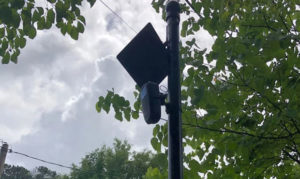
 Flock Safety pushes back on the myths driving Washington's camera bans
 Sheriff Keith Swank explains importance of Flock cameras, calls out fake privacy concerns
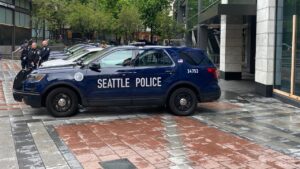 Rantz Exclusive: Seattle police recruit pipeline drops to 51 as officer departures hit 94, pacing to exceed 2025 separations
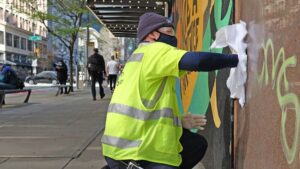 Seattle already blew past its $800,000 break-in repair baseline, and the council wants another $1 million
 ‘Ratchet ass Tacoma’: New body cam shows what Krista Perez said about the city she was just elected to represent
Comments
3 Comments
This law is another piece of the Defund the Police puzzle. Would you want to work somewhere where the head of the company was always trying to make you a criminal for doing your job?
WA dems are intent on destroying the state...
Should police recruits handcuff themselves before or after they're charged with first degree graduation?