
‘Bottom of the list’: Tacoma and Bremerton among worst-ranked cities for veterans in study
CardRates ranked 57 cities on housing, safety, and cost of living for veterans. Tacoma and Bremerton fell to the bottom. Washington Democrats own this.
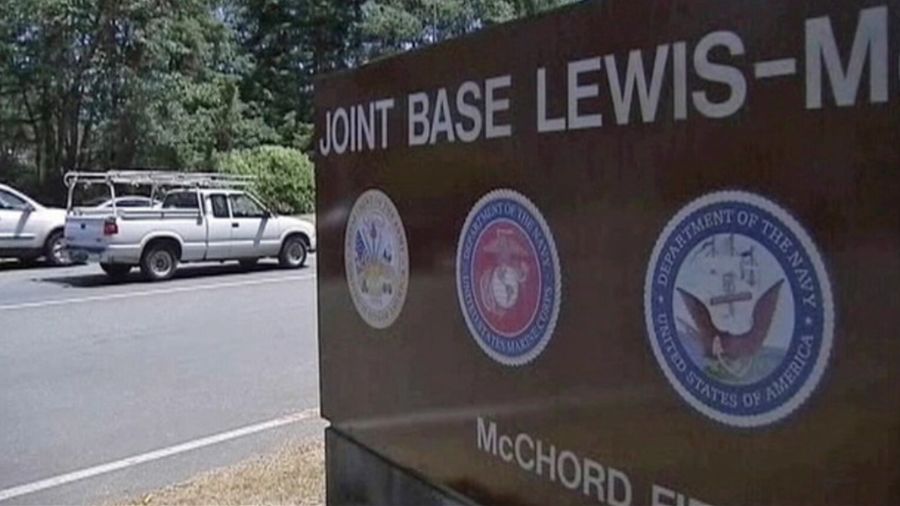
Tacoma and Bremerton did not fare well in a new study for veterans. (Photo courtesy of KIRO 7)
(Photo courtesy of KIRO 7)
Washington state politicians love to talk about supporting the troops. But new analysis from CardRates.com complicates that narrative.
The personal finance site ranked 57 U.S. cities with the largest veteran populations on the metrics that impact day-to-day life after service: housing affordability, cost of living, tax treatment of military retirement pay, and safety. Tacoma and Bremerton, two military communities, fell to the very bottom of that list.
State rankings don’t capture the full picture
Washington ranked near the bottom of states and territories in WalletHub’s most recent study of best places for military retirees, narrowly outrunning only Oregon. The CardRates city analysis takes that poor showing and makes it more specific.
Tacoma sits adjacent to Joint Base Lewis-McChord, which supports more than 45,000 service members and roughly 120,000 military retirees. It is the only Army power projection base west of the Rocky Mountains. Bremerton is home to Naval Base Kitsap, one of the Navy’s primary Pacific Fleet installations.
Washington’s affordability crisis hits veterans where it hurts
Washington is the fifth most expensive state in the country, according to a Washington Roundtable and Kinetic West analysis, with costs rising faster here than anywhere else in the nation over the last decade.
For a retired E-7 or O-4 living off a military pension in Tacoma or Bremerton, those numbers hurt. Home prices have surged far beyond what fixed military retirement income can sustain in Pierce and Kitsap counties, and rental markets have followed. CardRates measured these affordability pressures, and both Washington cities ended up near the bottom of a field of 57 cities with sizable veteran communities.
Washington legislators passed a bill in 2024 expanding state benefit eligibility to more than 35,000 veterans who had been left out of existing programs. Lawmakers celebrated it as proof of the state’s commitment to those who served. Whether a veteran can actually afford to remain in Washington after qualifying for those benefits is a separate question entirely, and the CardRates data suggests that for many, the answer is no.
Safety drags city scores even further down
Safety was also a direct component of the CardRates city scores. But a separate Omega Law Group study ranked Washington fifth among the most dangerous states for neighborhood safety, with roughly 2,126 home-related crimes for every 100,000 residents. Tacoma has its own persistent crime challenges, compounded in recent years by state-level criminal justice reforms that have constrained how aggressively local police can address property crime.
A pattern that keeps repeating itself
This is not the first time Washington has ranked poorly on measures that matter to veterans and military families.
The state has placed near the bottom across a range of livability and affordability indices in recent years, even as Idaho and other Pacific Northwest neighbors have climbed toward the top of similar lists. What makes the CardRates findings hurt more is that Tacoma and Bremerton are not generic Washington cities caught in a statewide trend. They are communities whose identities are helped to be defined by military service, communities that built their economies around the military, and communities that have since made it increasingly difficult for veterans to afford to stay.
Follow Seattle Red on-air at 770 AM, on the Seattle Red app, and streaming audio and video on SeattleRed.com.
Related
 DOJ opens federal investigation into Washington women's prison over transgender inmates
 'Stop the cosplay': Rep. Michael Baumgartner torches Gov. Bob Ferguson for Texas campaign op
 Jim Walsh: Five Washington Supreme Court seats are on the 2026 ballot. Voters who skip them are handing the court to activists.
 Everett wants $5 million for a new housing fund. Where will it go?
 Skip Black Friday: Saturday has the deepest online discounts, but Seattle’s sales tax eats nearly a quarter of your coupon
 Spokane Mayor Lisa Brown wants more of your sales, property and utility tax dollars to patch the city’s budget hole
Comments
0 Comments