
After calling fare enforcement racist, Sound Transit now wants entrance gates
Sound Transit proposes fare gates at 14 Link light rail stations after years of calling enforcement racist. Compliance has collapsed to the low 60s.
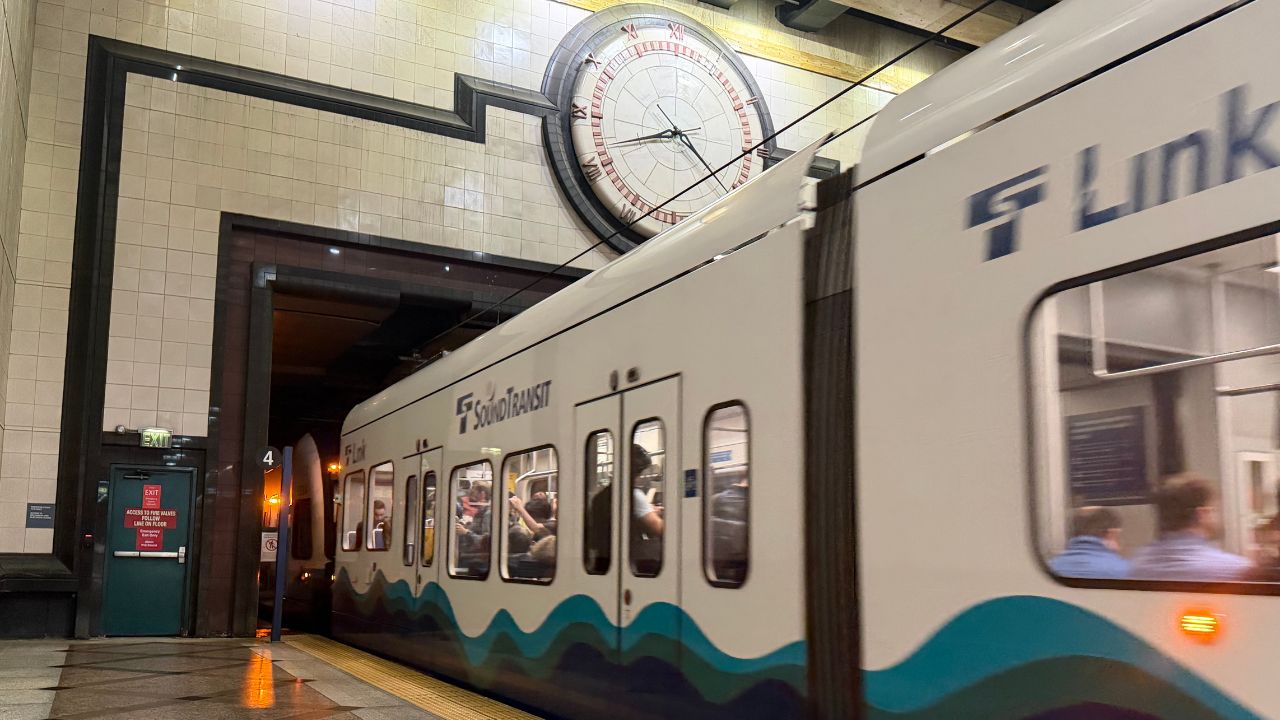
Sound Transit staff are recommending a pilot to install fare gates at up to 14 Link light rail stations after fare compliance dropped to the low 60s. (Jason Rantz)
(Jason Rantz)
After years of insisting that checking whether riders pay their fares was a “racial justice” problem, Sound Transit is now floating a pilot program to install fare gates at up to 14 Link light rail stations. The agency’s own staff told the Executive Committee last week that compliance is virtually non-existent since the agency walked away from enforcement, and physical gates may be the only way to get riders to actually pay.
The proposal, reported by KOMO News, follows a board directive from last year ordering a study of whether retrofitting existing stations with gates was financially and operationally feasible. Staff say yes. Construction costs are estimated between $79.3 million and $88.2 million, with a payback period of two to five years and projected annual net revenue gains north of $30 million once that payback hits.
This is a reversal of the posture Sound Transit board members took when they declared traditional fare enforcement racist in 2020 and replaced uniformed officers with unarmed Fare Ambassadors who hand out QR codes instead of citations. Fare Ambassadors still do not enforce fares.
A compliance collapse the agency cannot ignore
Sound Transit staff acknowledged that fare compliance on the 1 Line was around 85 percent in 2018 and 2019. After the agency pulled enforcement, that number dropped into the low 60s and has stayed there. Expanded staffing of Fare Ambassadors did not move it. The gates would help ensure fares are paid through station design rather than inspections, which is a polite way of saying the ambassador model has not worked.
As The Jason Rantz Show on Seattle Red 770 AM has noted, Bellevue Police even created a dedicated Light Rail Unit ahead of the Crosslake Connection opening because the existing system functions as a suggestion box, particularly around safety.
The pilot would target stations that combine high ridership with manageable installation costs, including Lynnwood City Center, Northgate, Roosevelt, U District, University of Washington, Capitol Hill, Westlake, Symphony, Pioneer Square, International District/Chinatown, Bellevue Downtown, Downtown Redmond, SeaTac/Airport, and Federal Way Downtown. Riders would tap an ORCA card, phone, or other payment method to enter and exit gated stations.
Ambassadors stay, enforcement does not
Even with gates, Sound Transit has no plans to abandon the ambassador program. No staffing reductions are proposed, and the agency said the move is part of what it now calls a “fare engagement” approach focused on education and customer service rather than enforcement. Ambassadors would help passengers navigate the system and access reduced-fare programs. But this ignores the reality that there’s a high number of homeless users who are not paying.
The agency is also still working out how to handle cash riders, with options including QR-code readers at gates, disposable smart-card tickets, or free ORCA cards during the pilot period. Youth riders under 19 would continue to ride free.
If the board signs off, procurement would begin later this year, with construction funding potentially included in the 2027 budget. Gates would not enter service until 2029 or 2030, with several more years of testing before any decision on wider deployment. That is an unnecessarily long runway for an agency already staring down a multibillion-dollar shortfall and losing tens of millions of dollars a year to riders who figured out the honor system is exactly what the agency keeps telling them it is.
Follow Seattle Red on-air at 770 AM, on the Seattle Red app, and streaming audio and video on SeattleRed.com.
Related
 Sound Transit blows millions on ads while Ballard waits for light rail it's been paying for
 Bob Pishue: It’s time to save taxpayers from Sound Transit’s strategic misrepresentation
 Rantz: Sound Transit opens Crosslake Connection, over/under set at 12 days before first shutdown
 A year after fencing off pothole money for the World Cup, Seattle’s council keeps a 29% cut in play
 Everett’s bus merger will double its transit sales tax, even as voters complain about high cost of living
 Pierce County ferry fares rise again in January. What do riders get in return?
Comments
2 Comments
Claimed low 60% fare compliance is likely exaggerated. I'd guess 40% absolute max. So payback period will be shorter. Bonus is that it will keep more riffraff out.
Assuming Rainier Valley and the surface stations are excluded. Otherwise, folks would walk on the tracks to evade - recipe for disaster.
"Construction costs are estimated between $79.3 million and $88.2 million, with a payback period of two to five years and projected annual net revenue gains north of $30 million once that payback hits."
So what they're REALLY estimating is a cost around $150-300 million, a payback period of 15-30 years, and a revenue gain of $10-15 million. Never forget that Sound Transit has a LONG history of under estimating costs and timelines while over estimating revenue. It's not a mistake with Sound Transit, it's a feature.