
Rantz: Secretary of State Steve Hobbs plays dumb as DOJ demands voter data. What’s he hiding?
The DOJ has asked WA for voter registration data, but Secretary of State Steve Hobbs is feigning ignorance about its purpose. Jason Rantz explains why Democrats and their media allies are terrified of real oversight.

Watch: What is Secretary of State Steve Hobbs hiding? | 6 mins
The Department of Justice sent Washington state a letter on September 8 demanding voter registration records—including names, addresses, birth dates, and partial Social Security or driver’s license numbers—within 14 days. The purpose is clear: to ensure only eligible voters are on the rolls. That’s it. Basic oversight.
But Secretary of State Steve Hobbs is pretending not to understand. In a statement, Hobbs grandstanded: “Until DOJ provides me with information on what they plan to do with the data, I will not comply.” CNN eagerly framed this as a controversy about Trump’s supposed misuse of private information. And the local press dutifully followed suit.
Hobbs knows full well why the DOJ wants the data. The request is about voter integrity—identifying ineligible registrations, whether that’s deceased individuals still on the rolls or non-citizens who should never have been registered in the first place. The media knows it too. Yet they’re acting as if it’s some unspeakable mystery.
A contrived controversy by Steve Hobbs
Most of what the DOJ is asking for is already publicly accessible.
Campaigns, political parties, and even journalists routinely request voter files. Hobbs himself provides names, addresses, and years of birth to anyone who asks. The only difference here is that the DOJ also wants partial Social Security or driver’s license numbers to confirm eligibility.
If Hobbs were acting in good faith, he could have easily said, “Here’s the public portion now, let’s talk about the identifiers.” But instead, he staged a press release to look like a resistance hero. The same man who insists the system is airtight suddenly claims providing the data to prove it is too dangerous. Which is it?
Hobbs is deliberately crafting a distraction—not because he’s worried about Trump misusing voter rolls, but because he doesn’t want oversight. Democrats in this state have long treated election audits as an existential threat because every time dead voters or non-citizens show up on the rolls, they insist it’s just an anomaly. Yet the “anomalies” keep piling up.
Harmeet Dhillon Won’t Blink
This fight isn’t going away. The DOJ’s letter was signed by Assistant Attorney General for Civil Rights at the U.S. Department of Justice Harmeet Dhillon. And if there’s one thing you can count on, it’s that Dhillon doesn’t back down. When I said on X that she’s unlikely to blink in this fight, she responded bluntly: “We won’t.”
That should terrify Hobbs and his allies. They’ve grown accustomed to stonewalling, to resisting oversight with the help of a compliant press. But this time, they’re up against an administration — and an assistant attorney general—determined to enforce election integrity through the courts.
And that’s exactly where this is headed. Hobbs can stall for headlines, but eventually a judge will decide. And once it gets there, it’s hard to see how Washington can legally justify withholding information that nearly every campaign and reporter already has access to.
We won’t — https://t.co/6HMs8cavrB
— AAGHarmeetDhillon (@AAGDhillon) September 14, 2025
What’s Really at Stake
This is about trust in elections. If Democrats truly believe our voter rolls are pristine, then what’s the harm in letting the DOJ verify? If Hobbs is right that illegal immigrants can’t register to vote, then the data will prove him correct. But his refusal to comply suggests he’s worried about what that oversight might uncover.
This isn’t complicated. The DOJ asked for data. Hobbs is pretending not to understand why. The media is pretending, too. But Harmeet Dhillon summed it up best: when it comes to election integrity, “We won’t” back down.
Listen to The Jason Rantz Show on weekday afternoons from 3 p.m. – 7 p.m. on Seattle Red on 770 AM (HD Radio 97.3 FM HD-Channel 3). Subscribe to the podcast here. Follow Jason Rantz on X, Instagram, YouTube, and Facebook.
Related
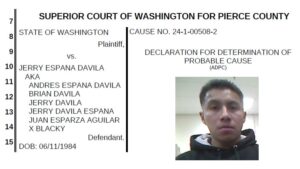 Rantz: He was deported four times. Washington State policy still let him murder a man in Pierce County
 She's running to fix Seattle's homelessness problem—and her past is her greatest weapon
 Spokane Valley eyes pot tax hike to cover $1.1M budget deficit
 Cargill: Washington’s $4 billion budget gap proves Olympia has a spending problem
 Chris Cargill: First report on Idaho ed choice tax credit shows program a monumental success
 Dave Larson: Washington needs to reform judicial election process

Comments
4 Comments
It’s your opinion that’s gaslighting. The fact is there is a large percentage of the registered voter rolls that are ineligible people. This is simply an oversight act by the DOJ to do its job and look at the rolls and have the state clean them up. That is all. That’s what their job is and they’re trying to do it. There is no reason you can justify that ineligible people should vote. Just yesterday I mentioned this issue to my sister who moved to Texas five years ago. She told me she still gets ballots from Washington state for every election but she just throws them away. She does not have a drivers license or car registration or any other official connection with Washington state. So you know, as we all know that there are many people who are registered to vote in Washington who should not be. You have to be for free and fair elections no matter what your politics are and thank God that finally the DOJ is trying to do its job.
Sounds like it'll be a good case olin court, it will be adjudicated there. All the "experts" opinions don't matter, only the ones behind the bench in this case. "Unprecedented" isn't a reason to ignore the law just because no one has actually used it as it is written. It's unprecedented" that we don't have voter full verification regularly. Or motor voter rules, or when we stated same day voter registration. We need voter verification and to have the rolls cleared of people who no longer live in this state. I know of several where this is the case.
if there is nothing to see here by the federal oversight, than I fail to see the issue. They are going through the legal process, and I'll be interested in what is discovered.
What a gaslight opinion!
The request, signed by Assistant Attorney General Harmeet Dhillon, specified that the data must include registrants' full names, dates of birth, residential addresses, and either state driver's license numbers or the last four digits of Social Security numbers
This demand is part of a broader nationwide initiative by the Trump administration to collect voter registration data from states across the country. The DOJ has made similar requests to at least 27 states, with some reports indicating the number may be as high as 33 states. The Justice Department claims this effort is necessary to ensure states comply with federal election laws, specifically the Help America Vote Act (HAVA) and the National Voter Registration Act (NVRA).
While the Constitution grants Congress authority to regulate federal elections, experts argue the executive branch lacks authority to compile massive databases of voters' personal information without clear statutory authorization.
The NVRA typically restricts systematic voter roll maintenance activities within 90 days of federal elections. However, the current requests appear aimed at building a comprehensive national voter database rather than addressing immediate pre-election list maintenance needs.
Brennan Center for Justice, which tracks these requests, notes that while DOJ oversight of election administration isn't unusual, "requesting voter registration databases from such a large number of states, however, is unprecedented".
Reporting by Reuters revealed that the DOJ is in discussions with Homeland Security Investigations about transferring this voter data for use in criminal and immigration-related investigations. The Trump administration has confirmed that voter registration data collected by the DOJ is being shared with the Department of Homeland Security as part of efforts to identify and remove noncitizens from voter rolls.
The DOJ's request raises significant legal and constitutional concerns. Legal experts have questioned whether the federal government has authority to demand such comprehensive voter data from states. Justin Levitt, a former DOJ official and constitutional law professor, described the initiative as "extremely illegal" and noted that "data on particular individuals isn't particularly helpful in enforcing the NVRA/HAVA provisions the letters cite".
The federal government's collection of personal voter data may violate the 1974 Privacy Act, which requires public notification in the Federal Register and opportunity for comment before collecting personal records for new purposes. No such notification has been published.
Washington has laws protecting voter information that would prohibit disclosure of sensitive data like driver's license numbers and partial Social Security numbers.