
Rantz: With gold tax, Washington Democrats target a safeguard against their harmful policies
Washington lawmakers warn of economic uncertainty while imposing a new tax on gold and silver, drawing criticism over mixed signals on financial stability.


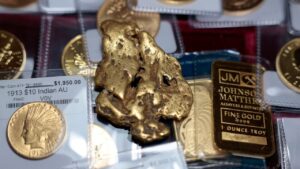
Gold coins on display, a traditional hedge against inflation and economic uncertainty that is now subject to Washington’s sales tax on precious metals. (Photo by Spencer Platt/Getty Images)
(Photo by Spencer Platt/Getty Images)
As Washington lawmakers warn residents about economic uncertainty, a massive budget gap, and long-term financial risks, Democrats are moving in the opposite direction when it comes to how individuals protect themselves from those same threats.
The new tax on gold and silver transactions makes Washington one of among a shrinking group of states that impose sales taxes on precious metals, even as lawmakers frequently cite inflation, climate disruption, and geopolitical turmoil as reasons for expanding government programs and spending. It doesn’t make sense.
Supporters of the tax argue it treats precious metals like other retail goods. But critics rightly counter that gold and silver have historically functioned less like consumer products and more like safeguards against inflation, currency devaluation, and market volatility; conditions state leaders regularly highlight in budget hearings and policy debates.
Washington Democrats taxing gold harms average residents
Washington’s move comes as many other states have repealed or reduced similar taxes in recent years, citing concerns that taxing precious metals discourages savings and pushes transactions out of state. Neighboring states, including Idaho, do not impose comparable taxes on bullion purchases, making cross-border buying an obvious attractive option for Washington residents. Drive thirty minutes east of Spokane, and you save a considerable amount on gold purchases.
The burden of Washington’s tax falls primarily on buyers making small or occasional purchases. These aren’t corporate buyers or the uber-wealthy. These buyers include retirees seeking stability, small business owners hedging against inflation, and residents concerned about long-term purchasing power. Unfortunately, Democrats don’t seem to care about the people they’re harming most.
Listen to The Jason Rantz Show on weekday afternoons from 3 p.m. – 7 p.m. on Seattle Red on 770 AM (HD Radio 97.3 FM HD-Channel 3). Subscribe to the podcast here. Follow Jason Rantz on X, Instagram, YouTube, and Facebook.
Related
 Washington Democrats slap new tax on gold and silver starting Jan 1, coin shops warn of fallout
 Rantz: Washington Democrats will raise taxes again next year. It's a guarantee
 Rantz: Lynnwood scrapped cameras that track car thieves, now wants speed cameras ticketing drivers at 2 a.m. outside empty schools
 Rantz: The Education Lab takes Gates and Ballmer money, then prints activist talking points on trans athletes as fact
 Rantz: Under proposed WA bail rule, skipping court dates wouldn’t even count as proof you might skip court
 Rantz: Seattle school board owes should personally pay for their I-638 lawsuit to overturn the will of voters

Comments
4 Comments
It’s like getting taxed or paying a fee to cash in a $20 bill for 1’s.
After last summer's Antifa-organized persecution of Christians, I'm afraid some genius will draft a bill stating that feeding [white male] Christians to Woodland Park's lions could be considered an alternate form of tax restitution.
Correct they don't care at all about the lower income people, and yes they do tax and spend but they also quite effectively are fraudulent. Care about the homeless raise taxes then ask for federal dollars choose a couple well connected NGO's and maybe hire some employees to over see it with six figure salaries let the NGO's do their NGO thing . The money will disappear immediately , the new hires will continue to collect their salaries and be a no show at work where ever their alleged office is , as for the homeless there's more and more of them everyday and nothing changes. As for the money well some of it finds it's way into the local DNC coffers, some goes into state and county and city politicians pockets ( allegedly campaign donations) a lot is skimmed off the top by the NGO's who is usually managed by relatives of elected officials or DNC scoundrels, some go to political activists including everyone's favorite Antifa but rest assured none of it will ever reach those smelly people on the streets that would be unhelpful if it did to the greater good of the party. Now about that gold tax what will happen to that money got any guesses can you say fraud??