
Rantz: Spokesman-Review’s Gonzaga racism surge story is missing any evidence of the incidents it claims exist
The Spokesman-Review claimed racism is surging at Gonzaga University but couldn't document a single incident. Jason Rantz breaks down the sourcing failure.


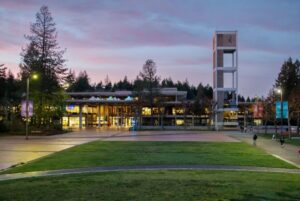
Gonzaga University's campus entrance in Spokane, Washington — where a Black Student Union gala in February ignited a racism controversy that the Spokesman-Review later covered without documenting a single specific incident. (Photo: Don and Melinda Crawford/Getty Images)
(Photo: Don and Melinda Crawford/Getty Images)
The Spokesman-Review wants you to be outraged about racism at Gonzaga University. It published a story this week telling you Black students are experiencing more of it, that fear is spreading across campus, and that administrators are scrambling to respond. What the paper apparently did not think you needed to know is what any of the racism actually was.
When I asked reporter Cannon Barnett what specific incidents supported those claims, he told me the most detail he could get was people yelling from cars and faculty-led classroom discussions. But this leaves a lot to be desired on what is either a serious story worth exploring, or an overstated concern by leftists who want to weaponize claims of racism.
What the original Gonzaga racism story actually documented
To be fair to Barnett, his February reporting on the gala itself was substantive. Black Student Union members reported that their Harlem Renaissance-themed event was marred by racial slurs, theft of property, and fetishizing comments directed at Black women by other attendees. On the anonymous app Fizz, racist responses followed, including comments suggesting stolen property belonged on an EBT card. At an off-campus afterparty, a student said the N-word was audible and the BSU president shut the event down because of it.
Those are specific, documented, named allegations. That is what a racism story looks like when it has sourcing behind it.
The follow-up story published this week is a different animal entirely.
A surge in racism at Gonzaga — claimed by sources who wouldn’t describe a single incident
Barnett’s April piece reports that BSU communications lead Grant Barnes told him racist incidents have “only increased” since February, and that students shared three racist interactions with university leadership. The story does not describe what any of those three interactions were. Barnes is also quoted saying professors have made jokes and comments, with zero detail about what was said or who said it.
“Even with them taking a little bit of action on Fizz, students are still experiencing racism on campus, and it’s coming from other students and faculty,” Barnes told the Spokesman-Review. “It’s not just online, it is in person. It is creating fear and anxiety to be in classrooms, to walk across campus and to enjoy the full college experience that we’re all paying for.”
That is a serious allegation. When I pressed Barnett on what backed it up, he responded directly: the most detail his sources would give him was yelling from cars and faculty-led classroom discussions about the gala event.
The evidence for a campus racism surge, sufficient to trigger a university task force, a Title IX investigation, and a major newspaper story, amounts to unidentified people yelling unspecified things from cars and teachers discussing a news story in class. And history suggests claims of a “professor said something racist,” has frequently resulted in an understanding that a political discussion took place that someone just disagrees with.
The sourcing problem the Spokesman-Review chose to ignore
Faculty leading classroom discussions about campus racism is not, on its face, evidence of racism. Barnett’s own story acknowledges this, noting that the frustration was partly about “a lack of communication between administration and faculty” over how to handle those discussions. That is an administrative coordination failure, which is a legitimate story. It is not, however, evidence of surging racism.
As for the car yelling, Barnes is quoted describing it as a real incident. But without any specifics, it is impossible to evaluate. Who yelled? What was said? Was this a Gonzaga student, a random Spokane resident, someone who had nothing to do with the university? The story does not say, because Barnett did not find out, because his sources apparently did not provide that information.
“Racism has existed before, and people have reported instances that they heard professors making a joke or a comment,” Barnes told the Spokesman-Review. “But just the amount that is happening right now – students are unable to be students.”
If the amount of racism occurring right now is genuinely greater than before, Barnett had an obligation to document it. By his own admission, he could not.
The journalism standard that should have applied to this story
None of this means racism at Gonzaga is not a problem. The February incidents were real and documented. The feelings students are describing are, I hope, genuine. But a story claiming a measurable increase in racist incidents requires more than advocacy organizations telling a reporter that things are worse. It requires incidents. Barnett did not have them, and the Spokesman-Review ran the story anyway.
Gonzaga is asking families for roughly $60,000 a year, is under a university-convened task force, and is conducting a Title IX investigation. Readers and prospective students deserve to know what specifically is being investigated. Instead, the Spokesman-Review gave Spokane a story built on sentiments it could not verify with a headline implying a documented pattern it could not establish.
The February story was solid. The April one was not. Barnett was candid enough to say so, even if his editors apparently were not.
Listen to The Jason Rantz Show on weekday afternoons from 3 p.m. – 7 p.m. on Seattle Red on 770 AM (HD Radio 97.3 FM HD-Channel 3). Subscribe to the podcast here. Follow Jason Rantz on X, Instagram, YouTube, and Facebook.
Related
 Rantz: UW boots Middle East Center chief over unhinged, pro-Iranian regime emails
 Evergreen State earns failing grade on antisemitism for second straight year as UW, Oregon show modest improvementRantz: Gonzaga University in Christmas tree controversy over sustainability
 Rantz: Lynnwood scrapped cameras that track car thieves, now wants speed cameras ticketing drivers at 2 a.m. outside empty schools
 Rantz: The Education Lab takes Gates and Ballmer money, then prints activist talking points on trans athletes as fact
 Rantz: Under proposed WA bail rule, skipping court dates wouldn’t even count as proof you might skip court

Comments
1 Comments
Why would the progressive Jesuit social justice institution allow net-actual facts to get in the way? For reference just take a look at SU Law and all of the activist judges hatched out of that system.