
Rantz: The Left is melting down over Brendan Carr because it doesn’t want consequences for hoax broadcasting
Carr cited existing FCC rules against hoaxes and distortions. The media lied about what he said and why it matters.

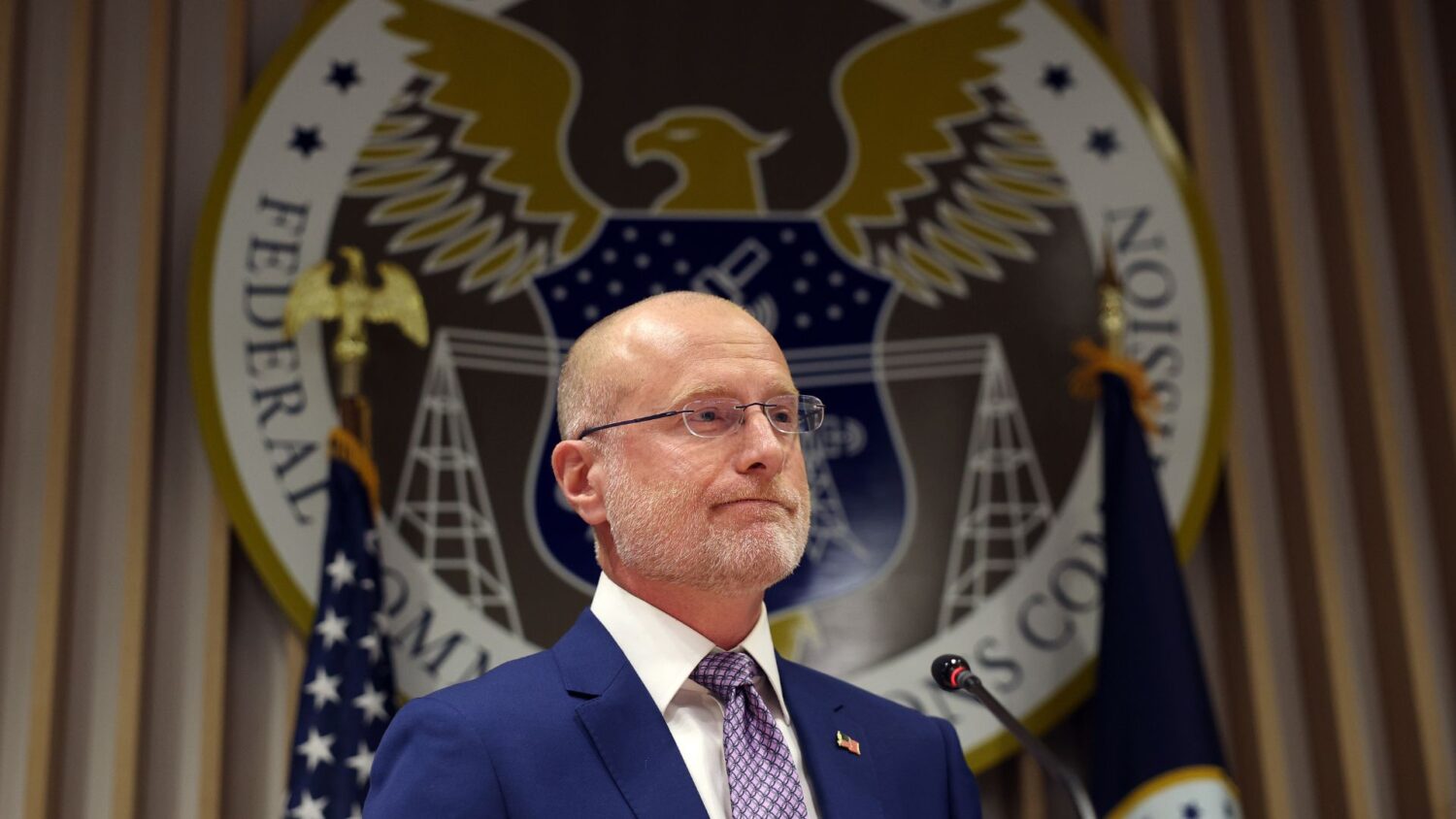
FCC chair Brendan Carr warned broadcasters about hoaxes and distortions, not anti-Trump coverage. The media erased that distinction on purpose. (Photo by Kevin Dietsch/Getty Images)
(Photo by Kevin Dietsch/Getty Images)
The left-wing media has a version of the Brendan Carr story it wants you to believe. It goes like this: the FCC chairman threatened to pull broadcasters’ licenses because coverage of the Iran conflict wasn’t flattering enough to Donald Trump. It’s a compelling narrative, but it’s also a lie.
What Carr actually said targeted something far more specific.
“Broadcasters that are running hoaxes and news distortions – also known as the fake news – have a chance now to correct course before their license renewals come up. The law is clear. Broadcasters must operate in the public interest, and they will lose their licenses if they do not,” he said.
He was talking about deliberate falsehood, not editorial disagreement. We know this because that’s literally what he said. The media stripped that context out of every headline it wrote, and that choice was not an accident.
A phony controversy
The controversy ignited after Trump complained that some outlets had falsely reported damage to five U.S. tanker aircrafts in Saudi Arabia. Carr responded by invoking language about hoaxes and distortions. CBS itself noted that Carr did not name specific networks and did not cite specific stories in that initial post.
So we’re not talking about a government official demanding favorable coverage. We’re talking about a regulator pointing at knowingly false reporting and saying the existing rules apply. And those rules absolutely exist. The FCC’s own public guidance states that it is illegal for broadcasters to intentionally distort the news, and that the agency may act when there is documented evidence that a licensee or its management deliberately falsified the news. There is also a separate hoax rule covering false broadcasts about crimes or catastrophes when the broadcaster knew the information was false and it foreseeably caused substantial public harm.
Carr didn’t invent a new standard. He pointed to old ones.
Why the media erased the key words
Notice what the panic-industrial complex did with this story. Every breathless headline stripped out the words “hoaxes” and “distortions” and replaced them with “anti-Trump coverage.” That reframing was deliberate. If you include those words, the story stops being a First Amendment emergency and becomes a conversation about whether deliberately fabricated broadcasts should face consequences. That is a conversation the media does not want to have.
These are the same outlets that spent years pushing for exactly that kind of consequence when the target was conservative media. Some openly argued for a harm-reduction model against so-called disinformation, stating that reducing a liar’s reach is not the same as censoring.
The pearl-clutching from that crowd deserves to be laughed out of the room.
A narrow principle the Left suddenly hates
The FCC licenses local broadcast stations operating on public spectrum. Reuters explicitly noted that Carr directed his remarks at licensed television and radio broadcasters. Print and digital media are unaffected by anything he said.
Wrong analysis is not a hoax. Editorial disagreement is not a distortion. Criticism of the president is not grounds for license action, and nothing in Carr’s remarks suggested otherwise. The principle at stake is narrow and already established: if a licensed broadcaster knowingly airs fabricated stories, there may be regulatory consequences under standards that predate this administration by decades.
Honest journalists do not fear a rule against knowingly false hoaxes. A reporter who gets a story wrong and issues a correction has nothing to worry about. A producer who pushed a fabricated narrative onto the air because it fit a preferred storyline might have a little more to think about. Good.
The outlets losing their minds over this are not defending press freedom. They are defending the specific invented right to spread hoax content on licensed public airwaves without accountability. Their hysteria about Carr reveals less about authoritarianism than it does about their own habits. And that is precisely why the distinction between criticism and fabrication matters, even when the media is determined to pretend there is no difference at all.
Listen to The Jason Rantz Show on weekday afternoons from 3 p.m. – 7 p.m. on Seattle Red on 770 AM (HD Radio 97.3 FM HD-Channel 3). Subscribe to the podcast here. Follow Jason Rantz on X, Instagram, YouTube, and Facebook.
Related
 Seattle Mayor Katie Wilson caves to union pressure over Seattle City Light CEO pick
 Rantz: Seattle Times cartoonist Dave Horsey reduces female officials to 'Barbies,' brands Jewish Stephen Miller 'Mein Kampf Ken'
 Rantz: The biohacking science behind glasses Rep. Couture wore during Washington's income tax marathon debate
 Rantz: Seattle's police chief is turning cops into federal obstruction tools
 Rantz: Lynnwood scrapped cameras that track car thieves, now wants speed cameras ticketing drivers at 2 a.m. outside empty schools
 Rantz: The Education Lab takes Gates and Ballmer money, then prints activist talking points on trans athletes as fact

Comments
0 Comments