
Snohomish County mayors revolt, demanding sheriff justify 130% jail booking fee hike
Fourteen Snohomish County mayors are demanding Sheriff Susanna Johnson justify a 130% booking fee hike and jail rate increases they say will wreck city budgets.
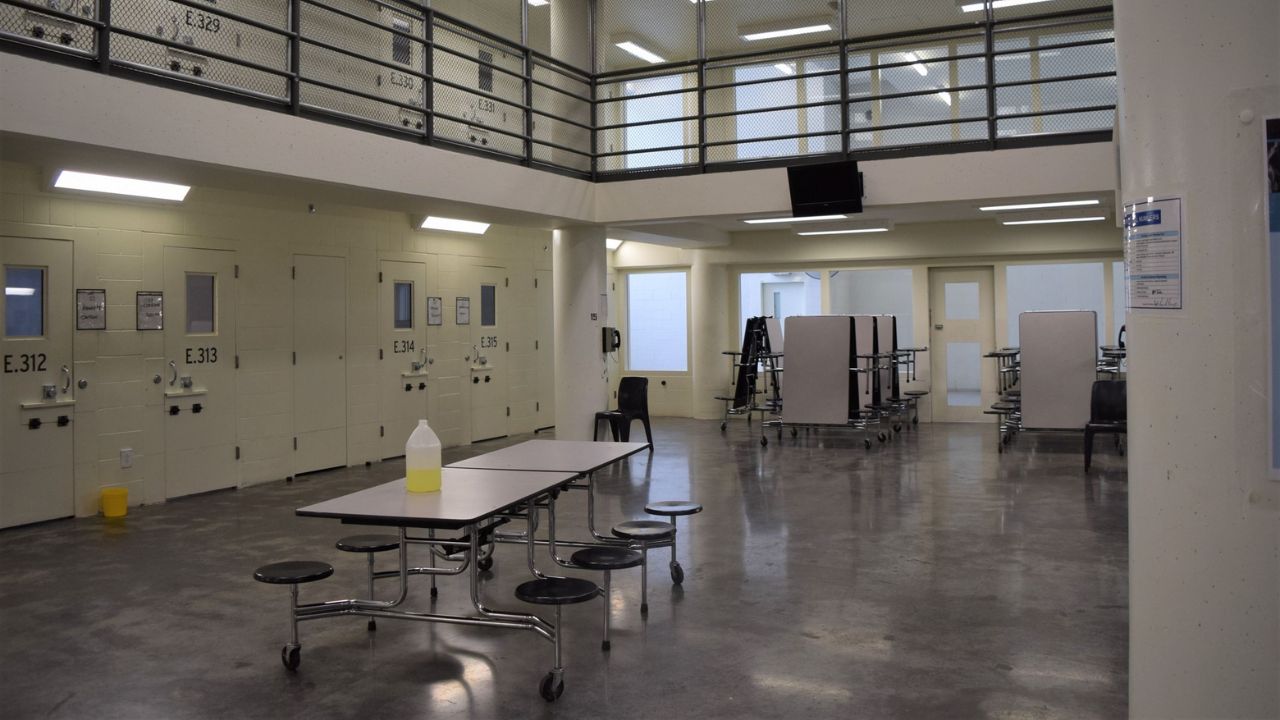
Fourteen Snohomish County mayors signed a joint letter opposing the proposed 2027 and 2028 jail contract rates. (Snohomish County)
(Snohomish County)
Snohomish County wants its cities to pay 133 percent more to book a single suspect into the county jail. Sheriff Susanna Johnson’s memo pins the increase on corrections union raises that blew past a 3 percent contract escalator nobody bothered to reopen, and cities are now being handed the tab for years of nobody watching the numbers.
Fourteen mayors signed a letter telling Johnson this will wreck their budgets.
Cities without their own jails pay Snohomish County to book, house and process the people their officers arrest, and the county sets those contract rates. The booking fee would climb from $151.61 this year to $353.61 in 2027 and $369.09 in 2028. Housing goes from $210.99 per day to $266.71, video court goes from $251.12 to $328.24, and a new overtime supplement of $32.78 per day appears where nothing existed before.
A three-day misdemeanor booking billed entirely to one city costs $784.58 today. In 2027 it would cost $1,252.08.
Fourteen mayors call the increases unprecedented
A July 20 letter includes the signatures of the mayors of Arlington, Brier, Darrington, Edmonds, Everett, Gold Bar, Granite Falls, Marysville, Mill Creek, Mukilteo, Snohomish, Stanwood, Sultan and Woodway.
The mayors acknowledged that running a jail costs more than it used to, but “the magnitude of the proposed increases is unprecedented.”
“After years of relatively modest annual adjustments, the proposed 2027 rates include a booking fee increase of more than 130 percent, significant increases to housing and video court rates, and the addition of a new overtime supplement. Increases of this size create substantial and unexpected impacts on city budgets,” the letter states.
Two cities in the county run their own jails and handled 2027 very differently.
“For comparative purposes, both the Lynnwood and Marysville jails approved fee increases for 2027, however limited those increases to between 3%-8%, which represent a more measured and stable approach,” the mayors wrote. Marysville Mayor Jon Nehring, whose city operates one of those jails, signed the letter.
The memo blames a contract escalator that fell behind
Johnson’s June 2026 stakeholder memo, obtained by The Jason Rantz Show on Seattle Red 770 AM, puts the blame on the arithmetic the county has been using for years.
“Previous Jail Rates calculations lacked full accounting on resources being used, underestimated costs, and for labor costs, the 3% inflator has not kept pace with Collective Bargaining Agreements (CBA’s),” the memo states.
The gap is documented in the memo itself. The interlocal agreement governing jail rates raised what cities pay by 3 percent a year. Corrections guild employees, who make up 210 of the jail’s 350 budgeted positions, took cost-of-living raises of 8 percent in 2022, 6 percent in 2023, 4 percent in 2024, 3.63 percent in 2025 and 2.72 percent in 2026, a cumulative 26.74 percent. The 2023 contract was signed in July of that year and triggered $5.4 million in retroactive pay that October.
“The 3% inflator included in the ILA did not keep pace with negotiated COLA increases, and the ILAs were not reopened to incorporate those additional costs,” according to the memo.
What cities actually pay for
Cities are billed for misdemeanors and gross misdemeanors.
The Corrections Bureau spent $72,132,077 in 2025. Partner agencies were billed $13,512,319 of that for booking, housing and video court, about 19 percent of the total. Booking is 60.8 percent billable to partners; housing is 35.4 percent.
The memo also credits federal Chemical Dependency Mental Health funds with keeping the housing rate lower than it would otherwise be. Roughly $1.8 million in 2027 salaries and benefits for 11.5 medical staff positions, plus about $400,000 in agency medical staffing, sit outside the housing rate estimate because CDMH dollars cover them.
Johnson defended the approach on grounds of who pays when cities do not.
“As a provider of jail services, we have an obligation to Snohomish County residents not to carry additional costs that are the responsibility of other jurisdictions (such as cities),” the memo states. “Proportional cost recovery is complicated and time consuming, but necessary,” the memo adds.
Cities say they never saw the documentation
The mayors want the county’s work shown.
“We appreciate your explanation that these changes are intended to recover costs that have not previously been captured. However, we have not seen sufficient documentation demonstrating why increases of this magnitude are necessary in a single year,” the letter states. “Greater transparency into the underlying cost model would help cities better understand and evaluate the proposal.”
The Sheriff’s Office, responding in writing through Director of Communications Courtney O’Keefe, said the meetings already happened and the complaining mayors skipped them.
“We shared the figures with our city partners as soon as we could (May 2026), then immediately set-up two in-person (with remote option) meetings in June 2026, to be transparent and answer any questions,” the office said. “These meetings were attended by members of some cities and police leadership, but the mayors and city leaders who did not attend appear to have some questions now.”
Johnson is scheduled to attend the mayors’ next meeting later this month to take questions.
Final call is still to come
The office also said the updated cost model was reviewed by the County Budget Office and will go to the County Council, which makes the final call on the rates. On why Snohomish County’s increase dwarfs the 3 to 8 percent adopted by Lynnwood and Marysville, the office said it believes Snohomish is the first jail in the state, or one of the first, to use a proportional cost recovery structure that recoups the actual cost of misdemeanor bookings from partner agencies.
Johnson said much the same in her written reply to the mayors.
“Transparency in the process, and how we arrived at the figures, was the critical first step in the process, and the reason we held both in-person and virtual meetings to discuss it and answer questions. Additionally, there is some inaccurate information in the letter which could have been resolved through those meetings, or in follow-up communications we had with cities in the days/weeks following,” she wrote.
She did not identify which claims she considers wrong.
The sales tax stacking problem
Snohomish County is facing a projected $56 million structural deficit for the 2027-28 biennium, and the mayors argue their residents are being asked to fill part of that hole twice.
“We are also concerned that these increases are being proposed while the County is considering a councilmanic public safety enhancement sales tax,” they wrote. “Residents of incorporated cities would pay this additional tax, yet the revenues would remain exclusively with Snohomish County and would not be shared with the cities.”
That tax is Ordinance 26-030, a 0.1 percent sales and use tax projected to raise roughly $23.8 million a year for law enforcement, the jail, prosecutors, public defense and the courts starting in 2027. The County Council held its public hearing on it Aug. 12. Voters already rejected a version of it, turning down a 0.2 percent public safety sales tax in November 2024. House Bill 2015 then handed councils the power to impose up to 0.1 percent without asking anyone, which is exactly how Seattle passed its own public safety sales tax.
Because city and county versions of the tax stack, residents of Edmonds and Lynnwood would pay both. Edmonds Mayor Mike Rosen signed the letter. So did Everett Mayor Cassie Franklin, Gold Bar Mayor Steven Yarbrough, Granite Falls Mayor Matt Hartman and Mill Creek Mayor Stephanie Vignal.
“We believe this additional funding should help stabilize public safety costs, including jail operations, and reduce the need for such dramatic increases to contract rates,” the mayors wrote.
Council decides
In June, the County Council authorized a jail efficiency study after Johnson acknowledged that a corrections labor contract settled just before the 2025-2026 budget exposed the general fund’s structural deficit.
Mukilteo Mayor Joe Marine, Snohomish Mayor Aaron Hoffman, Stanwood Mayor Sid Roberts, Sultan Mayor Russell Wiita and Woodway Mayor Mike Quinn rounded out the signatures on a request the county has not granted.
“We respectfully ask that the County reconsider the proposed 2027/2028 jail rates and work with its municipal partners to develop a more reasonable approach,” the mayors wrote. “We value our partnership with Snohomish County and remain committed to working together to provide effective, sustainable public safety services for all our residents.”
The current interlocal agreement expires Dec. 31. Fourteen city budgets are now waiting on what replaces it as they try to figure out the budget implications.
Follow Seattle Red on-air at 770 AM, on the Seattle Red app, and streaming audio and video on SeattleRed.com.
Related
 Rantz Exclusive: Tacoma Democrat arrested in five-car DUI crash one week after winning House primary
 Former Amazon executive moves $150 million startup headquarters from Seattle to Dallas
 Renton to cover Flock cameras with garbage bags to appease anti-ICE, defund police activists
 Rantz Exclusive: Seattle police recruit pipeline drops to 51 as officer departures hit 94, pacing to exceed 2025 separations
 Rep. Matt Marshall warns I-638 will fail in court like I-2066, I-976 and I-1366 on a $150,000 budget
 Spokane Mayor Lisa Brown wants more of your sales, property and utility tax dollars to patch the city’s budget hole
Comments
0 Comments