
4-H going away in King County
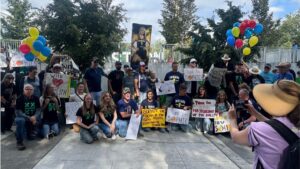
As of this week because of budget cuts, King County is the only county in Washington not funding its local 4-H Club. It is only one of a 11 counties in the country which have pulled their support for the youth program.
As of this week, because of budget cuts, King County is the only county in Washington not funding its local 4-H club. It is only one of a 11 counties in the country which have pulled their support for the youth program.
You recognize the 4-H kids when you see them. They are the kids showing off their bunnies, cows, and horses at the local fair. Kids like a young Kim Giglio in the eastern Oregon town of Hermiston.
“My fondest memories were all wrapped around the county fair and showing my horse,” said Giglio.
But the stereotype of 4-H kids that you might have, of farm kids doing farm things, isn’t reality.
4-H teaches a lot more than you might realize, life skills like public speaking, accounting, writing, responsibility, and the value of community service. It took young Kim Giglio from Hermiston to a magazine job in New York City.
“I learned to set goals,” she said. “I learned to speak in public. I learned critical thinking skills and good writing skills which went on to be my career. I learned to deal with success. I learned to deal with defeat, hopefully with grace, and good sportsmanship.”
They also teach the value of the journey, not just the destination.
4-H serves 10,000 kids in King County, and Giglio said many of the programs have nothing to do with agriculture.
“We have a robotics program here in King County,” she said. “We have cooking. We have sewing. We have leadership. We have a program called ‘Know Your Government’ that teaches kids about government. If a child has an interest, we can wrap the 4-H program around that interest.”
Giglio currently co-leads Mounted Mischief, a 4-H horse club in King County. She said it’s kept a lot of troubled and at-risk kids on the right track.
“I know that some of them have gone on to lead very productive lives because of the 4-H program,” Giglio said. “I really believe it’s saved them from some really bad outcomes.”
It costs King County about a $100,000 a year to fund the program. That’s $10 a kid. The Washington State University Extension service has donated enough money to keep the program going until September, but the club is being told to close-up its operation.
Related
 Everett wants $5 million for a new housing fund. Where will it go?
 Downtown Seattle condo losses pile up after voters keep Ferguson’s income tax and buyers walk to cheaper units
 Rantz Exclusive: Seattle police recruit pipeline drops to 51 as officer departures hit 94, pacing to exceed 2025 separations
 Rep. Matt Marshall warns I-638 will fail in court like I-2066, I-976 and I-1366 on a $150,000 budget
 Skip Black Friday: Saturday has the deepest online discounts, but Seattle’s sales tax eats nearly a quarter of your coupon
 Spokane Mayor Lisa Brown wants more of your sales, property and utility tax dollars to patch the city’s budget hole
Comments
0 Comments