
Oregon to consider statewide ban on Flock cameras and other ALPR technology in next legislative session
Flock cameras are once again drawing criticism, this time from Oregon lawmakers who are considering a statewide ban on the technology next year.


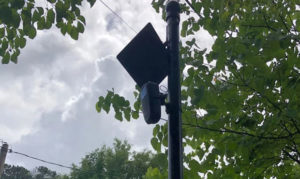
Mayor Katie Wilson's audit of Seattle's police surveillance cameras is still pending. (Flock courtesy photo)
(Flock courtesy photo)
As Flock cameras come under increasing scrutiny across the country, Oregon lawmakers are considering banning the technology altogether, according to the Oregon Capital Chronicle. A great deal of paranoia has developed over automated license plate reading technology (ALPRs), typically due to unfounded fears about data collection and information being shared with federal immigration authorities.
Several cities in the Beaver State have already ended their use of Flock cameras, and now there is a bipartisan push in the State Legislature for a total ban in 2027.
“My constituents have been clear with me that they want to be able to go about their lives without being surveilled, and we are quickly moving into a new age in which everything we do is being tracked,” said Rep. Willy Chotzen (D-Portland), who serves as vice chair of the House Judiciary Committee. “People don’t like it, they find it creepy, and they want to make sure that we’re protecting our rights to privacy.”
The legislation has bipartisan support
Chotzen is getting help from across the aisle and has teamed up with Rep. Alek Skarlatos (R-Winston) to introduce the legislation next year. The bill would indefinitely ban ALPRs statewide.
“To me, it’s a pretty clear Fourth Amendment violation,” Skarlatos told The Oregonian.
Lawmakers already took action earlier this year with Senate Bill 1516, which allowed Oregonians to sue vendors of ALPRs. It also limited the amount of time police can hold onto data to 30 days unless it is connected to a criminal investigation or court proceeding. The safeguards received the support of leaders in law enforcement.
“The ability to share and query ALPR information in these clearly permissible scenarios strengthens interagency coordination, improves case outcomes, and enhances community safety while fully respecting Oregon’s legal boundaries and protected activities,” wrote presidents of the Oregon State Sheriffs’ Association and Oregon Association Chiefs of Police in a February 2026 letter.
Supporters of ALPR technology urge caution
Flock has responded to the proposed legislation by arguing that it would take a vital resource away from law enforcement.
“A blanket ban would take a proven investigative tool away from communities and officers who rely on it,” said Flock spokesperson Andrew Smith in a statement. “We supported the last session’s thoughtful, bipartisan legislation that put strong privacy, transparency and accountability guardrails in place — while preserving law enforcement’s ability to use technology responsibly to keep people safe.”
Local law enforcement is also pushing back against a total ban ALPR technology and notes that there are alternatives to Flock. For example, the Portland Police Bureau has five ALPRs created by the Chicago company Motorola Solutions that are installed on vehicles in the east precinct, according to bureau spokesperson Terri Strauss. Strauss says they have used this technology for over a decade.
“ALPR alerts do not provide independent authority to stop a vehicle; officers must confirm an alert and establish their own reasonable suspicion or probable cause before making a stop,” wrote Strauss in an email. “All ALPR data is owned by the city of Portland, securely stored in compliance with Criminal Justice Information System requirements, accessible only to Oregon law enforcement, and cannot legally be shared with immigration authorities.”
In order to advance the legislation, Chotzen and Skarlatos will likely need the support of Sen. Floyd Prozanski (D-Eugene) who is the Chair of the Senate Judiciary Committee.
“I value the tool for legitimate, lawful law enforcement purposes,” Prozanski said in January. “But I also believe that there needs to be safeguards and guardrails.”
Follow Seattle Red on-air at 770 AM, on the Seattle Red app, and streaming audio and video on SeattleRed.com.
Related
 Rantz: Edmonds banned Flock cameras, then went 24/7 on the ones that pay in obvious cash grab
 Renton to cover Flock cameras with garbage bags to appease anti-ICE, defund police activists
 Sheriff Keith Swank explains importance of Flock cameras, calls out fake privacy concerns
 Oregon’s gun permit fight is still alive, and Northwest gun owners need to know where it stands
 WA, Oregon join lawsuit over Medicaid work requirements
 Judge clears the way for Multnomah County to continue its war on fossil fuels

Comments
1 Comments
While I disagree with the real reason Oregon lawmakers are moving this direction (protecting criminals from Federal law enforcement), I do see this as a potential win for liberty. No government should have cart blanche power to continuously surveil the general public without a credible, imminent threat to public safety.