
Skillet shutters three Seattle restaurants, blaming the city’s brutal cost spiral
Seattle restaurant group Skillet is closing three locations after 18 years, pointing to rising operating costs and labor pressures in the city.
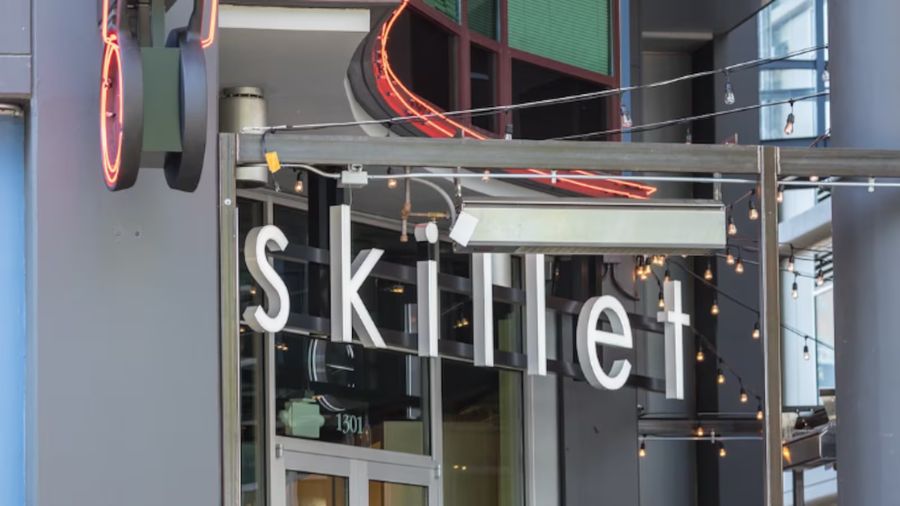
A Skillet sign hanging in front of the restaurant. (Photo courtesy of KIRO 7)
(Photo courtesy of KIRO 7)
Skillet, one of Seattle’s most recognizable restaurant brands, will close three of its locations next month, citing the rising cost of operating a food business in the city.
The company announced that its Capitol Hill and Post Alley locations will close on November 12, while its Regrade restaurant will close on December 12. Only Skillet’s Seattle Center Armory and Seattle–Tacoma International Airport locations will remain open.
The decision marks a significant contraction for a business that began 18 years ago as a single Airstream food trailer serving creative comfort food on Seattle streets. Skillet expanded into brick-and-mortar locations over the years and built a loyal following, but the financial pressures facing Seattle restaurants have continued to intensify.
Why is Skillet closing three locations?
In its announcement, Skillet said it has become “unable to survive the balance of what we can charge for a meal with the increasing costs of what it takes to produce a meal.”
While the company did not cite specific policies, Seattle restaurant operators have repeatedly pointed to a combination of cost pressures: rising wages, the absence of a tip credit in Seattle, inflation in food and supply pricing, and higher commercial rents. Many operators have said the margins that once made neighborhood restaurants viable have narrowed to unsustainable levels.
The closures are the latest in a series of hospitality cutbacks across the city. Restaurants have warned that Seattle’s wage laws — which require employers to pay the full minimum wage to tipped workers, unlike most states that allow a tip credit — significantly increase labor expenses. Businesses also continue to face elevated insurance costs, regulatory fees, and the lingering impacts of declining foot traffic in some neighborhoods.
Goodbye to an institution
Skillet’s remaining locations may fare better due to unique conditions. The Armory sees steady year-round visitor traffic tied to Seattle Center events, while SeaTac’s terminals offer a captive airport customer base. Neighborhood restaurants, however, rely on more predictable daily business and have been more affected by increased operating costs.
The company used its announcement to thank customers and direct potential employers to contact Skillet’s human-resources department if they are seeking staff. The closures will affect workers across multiple roles, including cooks, servers, managers, and front-of-house staff.
Follow Seattle Red on-air at 770 AM, on the Seattle Red app, and streaming audio and video on SeattleRed.com.
Related
 Rantz: Patty Murray ripped for aggressively ignorant Argentina 'bailout' claim
 Rantz: Seattle is closing more parks over its failed homelessness strategy
 Portland finally cracks down on homeless camping—but issues more warnings than tickets
 Rantz: The Mariners have avoided politics for years, then mistakenly gave the ball to Andy Beshear
 Washington has fifth-largest unemployment increase in the nation, study finds
 Rantz: MS NOW asked Washington’s AG how he’d protect polling places. We don’t have any.
Comments
2 Comments
One aspect not mentioned. Increasing COsts they cause Gross sales to increase. That means more tax dollars draining money away from the business needing to raise costs for their products. There is a tipping point that no longer afford to buy their services. How can they maintain a company or Business when you cause expense increase to get more tax revenue.
Food inflation has been stable for two years now. It ain't food inflation. It's Seattle: arbitrary wage hikes forced by the city, public drug use allowed, addicts stealing from retail turning areas in ruin, etc.