
EPA chief Lee Zeldin unveils WOTUS overhaul that restores property rights for farmers and landowners
EPA Administrator Lee Zeldin rolls back the WOTUS rule, limiting federal control over private land.

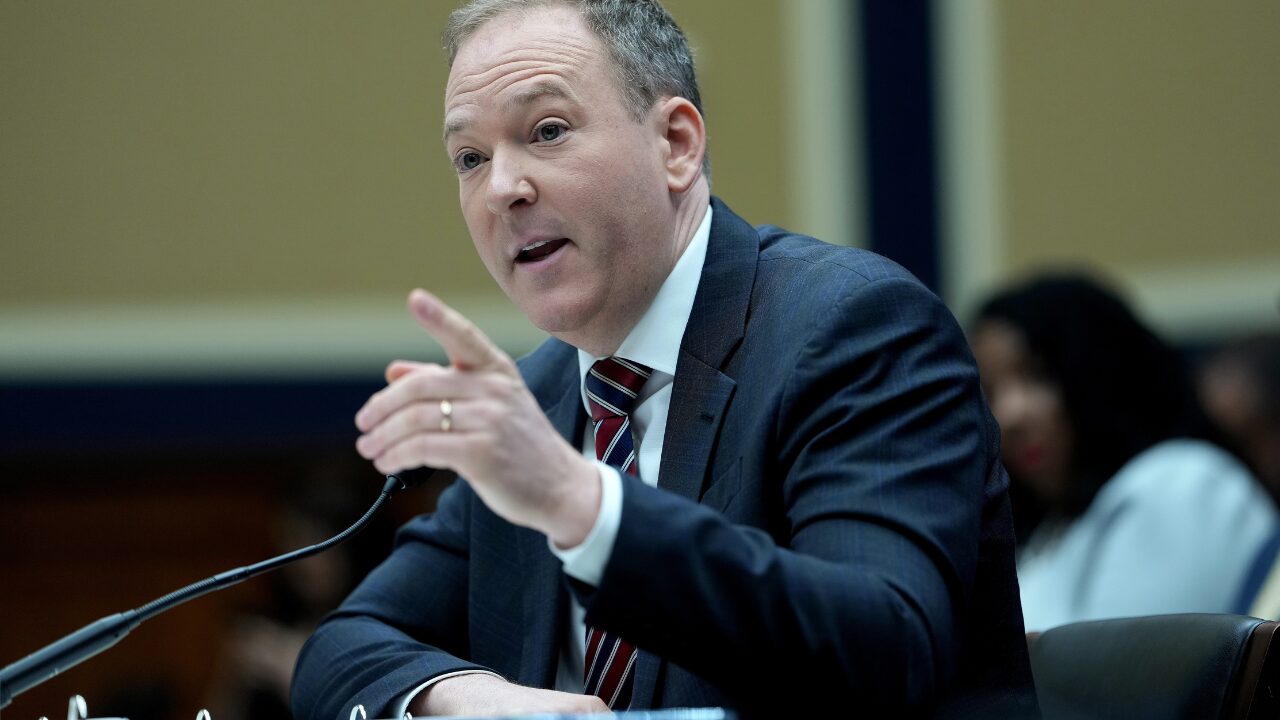
Lee Zeldin reshapes EPA water rule for landowners. (Photo by Kevin Dietsch/Getty Images)
(Photo by Kevin Dietsch/Getty Images)
Environmental Protection Agency (EPA) Administrator Lee Zeldin will announce Monday a major overhaul of the widely criticized Waters of the United States (WOTUS) rule—a regulation that once left an Idaho couple facing potential fines of $33,000 per day just for moving dirt on their own property.
The new rule fulfills a promise to deliver regulatory clarity, ending years of uncertainty for farmers, ranchers, and homeowners who have lived under the fear that the EPA could “swoop in at any moment and usurp control of their lands.”
“When it comes to the definition of waters of the United States,” EPA has an important responsibility to protect water resources while setting clear and practical rules of the road that accelerate economic growth and opportunity,” Zeldin said in a statement to Fox News.
The Idaho nightmare and supreme court mandate
WOTUS was originally established under the Clean Water Act, but critics argue the rule’s scope was dangerously broadened under the Obama and Biden administrations. That expansion led to the ordeal faced by Michael and Chantell Sackett in Idaho.
The couple obtained local permits to build a “modest” home near Priest Lake. However, once their construction crew began spreading gravel on what was described as a “soggy” parcel, the Obama-era EPA intervened, threatening the Sacketts with massive daily fines.
The situation became a national flashpoint, culminating in a unanimous Supreme Court victory for the Sacketts in 2023. The Justices ruled that federal jurisdiction is limited only to wetlands and waters with a “continuous surface connection” to major navigable waters.
The new rule, developed with Assistant Secretary of the Army for Civil Works Adam Telle, directly draws upon the Sackett Supreme Court decision to align the scope of WOTUS with its original, Nixon-era intent.
Restoring common sense and property rights
The new regulation provides essential clarity, aligning federal policy with the demands of Americans who consistently called for common-sense rules that allow them to farm, ranch, and homestead while protecting waterways.
Administrator Zeldin emphasized the political nature of the previous rule.
“Democrat administrations have weaponized the definition of navigable waters to seize more power from American farmers, landowners, entrepreneurs, and families,” Zeldin told Fox News.
The rule provides essential clarity by:
- Defining Key Terms: Regulatory terms like “relatively permanent” (for waterways) and “tributary” are clearly defined. A tributary must now have a consistent flow into navigable waters to fall under federal purview.
- Creating Exclusions: The rule includes new exclusions for groundwater and runoff, as well as land previously covered by crops.
- Promoting Local Control: It works to promote the rights of state and tribal governments to make permitting decisions in areas they know best.
“No longer should America’s landowners be forced to spend precious money hiring an attorney or consultant just to tell them whether a Water of the United States is on their property,” Zeldin told Fox News.
The move, while celebrated by agricultural and energy producers who feared a “puddle could trigger federal permits,” was immediately met with fire from Washington Democrats.
Senate Minority Leader Chuck Schumer (D-N.Y.) attacked the decision saying the “MAGA Supreme Court is continuing to erode our country’s environmental laws,” and warning that the ruling “will mean more polluted water, and more destruction of wetlands.”
Follow Seattle Red on-air at 770 AM, on the Seattle Red app, and streaming audio and video on SeattleRed.com.
Related
 Chris Cargill: First report on Idaho ed choice tax credit shows program a monumental success
 Idaho sees record voter turnout for a midterm election
 Idaho voters pick the ‘gun that won the West’ as Washington tightens gun laws
 Chris Cargill: All of a sudden, the Electoral College – and small states – are in real danger
 Jason Mercier: The voters have spoken. What did they say about taxes?
 Meyer: In an otherwise dismal election cycle for Republicans, Idaho provides a glimmer of hope

Comments
2 Comments
Another win for American citizens from the Trump Administration
And Democrats will claim these new clearly defined terms will destroy the environment. No surprise there. They want vagueness to force things to shut down improvements needed to keep the property safe.