
Spokane approves ‘culturally responsive’ opioid treatments, council’s only conservative explains why that’s a bad idea
The Spokane City Council approved funding for 'culturally responsive' opioid treatments, but the council's lone conservative explains why that's a bad idea.


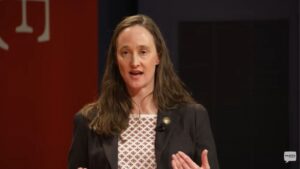
The Spokane City Council's lone conservative is urging caution over another potential tax increase. (Screengrab: Spokane City Council)
(Screengrab: Spokane City Council)
The Spokane City Council has approved almost $500,000 in opioid settlement funds for what it calls “culturally responsive” treatment services. Resolution 2026-0064 passed by a 6-1 vote with the council’s only conservative Michael Cathcart being the only dissenting voice.
The resolution authorizes investments from Spokane’s Opioid Response Fund and allows the administration to execute related contracts without further approval from the council. Cathcart, however, believes the city could have spent these funds more wisely.
Cathcart says the money could be spent more wisely
Cathcart said he’s against the “nickeling and diming” of the opioid response fund rather than devoting resources to more important needs.
“I don’t believe it’s the highest and best use of the dollars,” Cathcart told The Center Square.
The contracts are intended to address flaws in “culturally responsive” treatment for people addicted to opioids, which The Center Square describes as services “intended to be tailored to the needs of specific communities, including marginalized populations.”
Cathcart warned that not all of the city’s opioid money is being used directly on treatment services and posited that more money for facilities and programs that can immediately intervene would be a better use of funds.
Cathcart proposes a better alternative
Cathcart cited the Spokane Regional Stabilization Center as an exemplar of a prudent community investment. He says a former police chief recently described the center as one of the most “game-changing” investments over the last three decades.
Cathcart wants the center to be expanded by adding more beds and enhancing its ability to assist people struggling with behavioral health and substance-abuse issues. The center currently serves as a pre-booking jail diversion option and provides both medical and mental health treatment, as well as treatment for substance use. Law enforcement, first responders, hospitals, and other partners can all refer people.
Why the resolution passed
Other councilmembers explained they supported the measure because it would improve collaboration with the county in getting people into treatment.
“I think the reason this program is important is the city is not a provider of medical services, so yes we can contribute to them, we don’t receive the bulk of public health or opioid dollars so working with the county is always something we have to do to address this public health crisis,” said Councilmember Kitty Klitzke at last week’s meeting. “I do a lot of ride-alongs in my district and I saw a common occurrence where you go to people and ask if they need help and they say ‘no, thank you, I am good.’ So getting people into treatment and keeping them is hard.”
Councilmember Paul Dillon threw his support behind the resolution because he believes certain groups need special treatment in order to get the help the they need.
“We have to meet people where they are at and the holistic approach. This cultural part is critical,” said Dillon. “You look at the needs for LGBTQ+, Indigenous and Latino communities, having them be the messenger and more funding to do this work is important”
Follow Seattle Red on-air at 770 AM, on the Seattle Red app, and streaming audio and video on SeattleRed.com.
Related
 Lone Spokane Republican councilmember raises concerns about new tenant protection ordinance
 New study finds fewer than two-thirds of Bremerton businesses survive five years while Walla Walla quietly outperforms Seattle and Spokane
 Former Deputy Mayor Tim Burgess says Seattle's homelessness and drug strategy has failed
 Seattle homeowners turn to barbed wire to protect from dangerous homeless encampments
 From Port Orchard to Walla Walla, 17 groups split $45 million for homeless veterans
 Socialist mayors to lead LA, D.C., NYC, Seattle as Trump warns of ‘disaster’

Comments
1 Comments
how in the world did the seattle rot infect spokane