
The Cost of Legal Cannabis: Addiction, mental Illness, and fatal risk
Marijuana potency drives addiction and mental illness, warns reporter Alex Berenson.

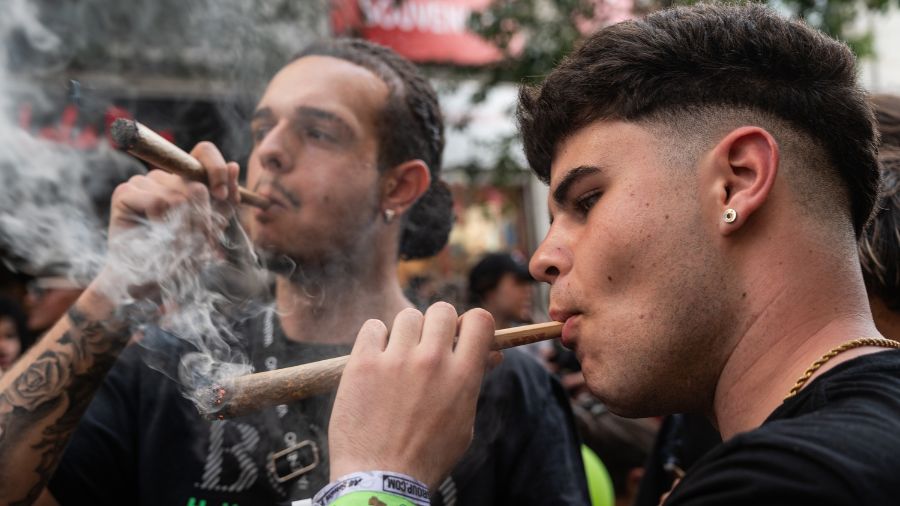
High-THC use poses severe public health risks. (Photo: Marcos del Mazo, Getty Images)
(Photo: Marcos del Mazo, Getty Images)
The cultural normalization of high-potency cannabis, particularly in states like Washington, is masking a public health crisis characterized by addiction, psychiatric risk, and unforeseen dangers. That’s the warning issued by longtime New York Times reporter and best-selling author Alex Berenson, who wrote the book, “Tell Your Children: The Truth About Marijuana, Mental Illness, and Violence.”
While many view widespread cannabis use as a common and harmless cultural occurrence, Berenson stresses that the true picture is far more concerning, especially given the dramatically increased potency and availability of modern THC products.
The reality of high-frequency use
Berenson provided a 30,000-foot view of the current landscape, noting that the perceived ubiquitous use is inaccurate.
“So, I mean, it’s very interesting, because there is a perception that everybody’s using cannabis or, you know, or THC and THC vapes, that’s not actually really true. It’s roughly about 15% of the population… But even so, it’s not a majority of the population,” Berenson told The Jason Rantz Show on Seattle Red 770 am.
The extreme use is driven by affordability and convenience, leading to a population Berenson describes as essentially living in a constant haze.
“You wind up essentially in a in a haze all the time, and a significant number of those people progress to addiction,” Berenson said.
Berenson also drew a stark parallel to alcohol abuse.
“If those people were out, were drinking alcohol that way, we have a word for people who drink like that. We call them alcoholics,” Berenson said.
Refuting the myth of non-addiction
The cannabis community has long fostered the perception that the drug is non-addictive, a claim Berenson refutes based on the reality of withdrawal.
“There’s a perception that the cannabis community has fostered that this is not an addictive drug. But that is not true,” Berenson claimed.
He explains that while the physical withdrawal may not be as severe as alcohol, people who try to quit using daily face major challenges.
Beyond the struggle for sobriety, Berenson warns that the growing potency of THC has amplified the drug’s dangers, particularly the risks associated with mental illness and physical safety.
While Berenson’s book initially focused on the link between cannabis, mental illness, and violence, he notes that since its 2019 publication the science has only confirmed greater risks.
“The science on the psychiatric effects of cannabis was unfortunately strong, and unfortunately, it has only gotten stronger,” Berenson said.
Safety warnings
Berenson also pointed to a disturbing safety risk, specifically mentioning pediatric warnings in Oregon.
“Pediatricians in Oregon were telling, you know, parents of young kids not to use because you can go to sleep so heavily with the high THC stuff, that if your child is in bed with you, they may wind up… actually, you know, killing your child in your sleep and not knowing because you don’t wake up because you’re so out cold.”
Berenson concluded by stressing that the combination of accessibility, low price, and extreme potency is driving these dangerous trends.
“The fact that the, you know, again, this, the new stuff is so cheap and so potent, has only made it worse,” Berenson said.
Listen to The Jason Rantz Show on weekday afternoons from 3 p.m. – 7 p.m. on Seattle Red on 770 AM (HD Radio 97.3 FM HD-Channel 3). Subscribe to the podcast here. Follow Jason Rantz on X, Instagram, YouTube, and Facebook.
Related
 Portland and Seattle's health system and economy are failing veterans
 Rantz: Democrats knew they were funding healthcare for illegal immigrants — and lied about it
 Seattle Public Health shuts down food carts after legal vendors demand action
 Washington’s accounting mistake could cost hundreds of millions in taxpayer dollars
 Mark Cuban calls out Pramila Jayapal’s Medicare for All pitch over Washington’s 22% premium hike
 WA, Oregon join lawsuit over Medicaid work requirements

Comments
0 Comments