
‘Not a viable plan’: Puget Sound Energy is betting future on hydrogen-ready plants that don’t exist anywhere in Washington
Former Bellevue councilmember Kevin Wallace warns PSE's draft 2050 plan cannot work, citing a 13,900 MW winter gap, unproven hydrogen peakers and $116.8B costs.

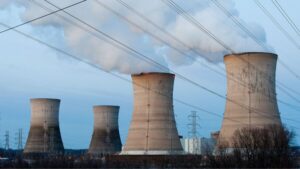
Puget Sound Energy's draft long-range plan projects a winter power gap of up to 13,900 megawatts by 2050. (Puget Sound Energy)
(Puget Sound Energy)
Former Bellevue City Councilmember Kevin Wallace is warning the public that Puget Sound Energy’s draft long-range plan cannot work, and the utility’s numbers show why. PSE projects it will need up to 13,900 megawatts of winter power it does not have by 2050, with roughly 5,000 megawatts coming from a fuel technology Wallace notes is not operating anywhere in Washington.
The figures come from PSE’s 2027 Integrated System Plan, which the utility presented to its Resource Planning Advisory Group on September 23. The draft slide deck, reviewed by Seattle Red, models what the Clean Energy Transformation Act (CETA) and the state’s electrification push will demand through 2050. The region already faces a projected power shortfall; Seattle Red reported last year that a utility-sponsored study warned of rolling blackout risk.
Wallace, CEO of Bellevue-based Wallace Properties, broke down the deck in a LinkedIn post. Nearly every alarm he raised traces back to PSE’s own admissions.
A plan built on power that does not exist
PSE’s existing resources supply roughly 5,000 megawatts at winter peak. By 2050, the draft shows need exceeding that capacity by about 5,700 to 13,900 megawatts, depending on the scenario. Even the reference case shows a gap of 5,126 megawatts in 2045, the year CETA requires 100 percent clean electricity.
To fill it, the reference case adds more than 5,000 megawatts of “flex-fuel peakers,” plants designed to burn cleaner fuels such as hydrogen instead of natural gas.
“The draft plan’s primary means of addressing the gaps is ‘flex fuel peaker’, which means replacing natural gas with an environmentally friendly fuel, like hydrogen. There is no flex fuel generation facility in Washington today. Some experiments are being run in the US. PSE relies on this unproven technology for roughly 5Gw of supply,” Wallace wrote.
PSE tested what happens without those emerging technologies. The portfolio cost nearly doubles to $104 billion and requires 54,940 megawatts of short-duration battery storage, roughly 30 times the reference case.
Substations and a $116 billion bill
PSE added 25 megawatts of substation capacity from 2022 through 2025. The reference case requires 1,775 megawatts by 2050, or about 71 new single-bank substations. That works out to three every year for 25 years. The utility’s slide concedes the point directly.
“All scenarios require unprecedented substation capacity by 2050,” the presentation states.
Total electric portfolio costs range from $59.5 billion in the reference case to $116.8 billion under the heaviest electrification scenario. PSE acknowledges those higher scenarios assume government mandates. “S2–S4 assume different forms of mandated electrification; these load levels are unlikely to occur organically,” the deck reads.
Your bank account will feel the pain
Wallace argued that customers have not been shown what any of this means for their bills.
“The costs have not been translated into electricity rates. In 2020 a typical home paid PSE $84/month for electricity. If the UTC approves their rate request it will be $213/month in 2029. That’s an 11% compounded annual increase each year. And those rates do not come close to funding the lowest-cost scenario in this plan,” he added.
That pending request would raise electric rates 29 percent over three years, and it faces pushback from Attorney General Nick Brown.
“This is not a viable plan. If you are an elected official representing people served by PSE, this is your responsibility and you need to take it seriously,” Wallace warned.
PSE is accepting public feedback on the draft through September 30 at isp@pse.com.
Related
 Meg Goudy: Taxpayer money for government employee compensation demands real transparency
 Washington's mask ban on ICE has produced zero results, and Democrats are celebrating it like breaking news
 Rantz: KING 5 linked ICE arrests at a Shoreline Costco and Bellevue REI to a Fiestas Patrias parade miles away
 PSE bills could hit $210 a month, and a Republican senator wants to know how much is Olympia’s fault
 Edmonds council unanimously fast-tracks six years of utility hikes as one member warns of ‘incredible sticker shock’
 Sam Cardwell: Congress should act quickly on energy permitting reform
Comments
3 Comments
mmm I honestly am not really sure what a public power option is. I don't live in seattle. Even though we have hydro where we are the damn network is terribly fragile. I"m not super savy bout gov't org's or public org's, save they oftne seem to me to be nothing more than black holes gobbling up money. So my gut reaction is, dear lord no, no more public Anything, I prefer private solutions. But I'm not certain at all that is what you meant or were implying.
I would imagine that what is most likely is a continued use of varying means of power generation, with a contant use of good renewables like hydro, maybe gothermal where it is possible an worth the expense. Everyone can't decide where nuclear energy is safe enough, then others seem to think Not using like coal or oil for infastructure power is great, I'd rather not, but folks want they electricity, right?
What I am Very certain about is that as demand continues to increase, the ability to generate an distribute must also increase an I have seen that. I have seen prices rize a bit, but I haven't seen investment in the infastructure an distribution network. Maybe it's happening an I don't see it. We get power outs here in unincorporated king county pretty often, some not long, others quite long so a back up gene or the likeis kind of standard here.
Hydrogen strikes me as a perfect potential replacement for what we run in our vehicals. I'm not sure it'll be the best choice for infastructure power, but for vehicals, if it can be made to work, would be excellent. As for what would improve infastructure power most? mmm I don't see much of a future for fossile based fuels. Nuclear ... maybe? Some areas are rich with water an renewable energy, other areas are desert in one way or another. I dobut one soultion will work for every place an group of pewople.
Do you hope for a public power option a la Seattle city light ?
Hydrogen Is the way to go, long term, or so i beleive, but I Don't think PSE or the political trash that drivs them are speaking and planning in good faith. PSE is failing badly now, they should be required to fix themselves Now before ever considering trusting them with future power needs which rightly will be far more than now or currently projected. Wish they were trust worthy, but currently, only thing gov't Should be doing is withrawing money, preventing rate increases until they firm up their infastructure issues and distribution issues. Till then there should be Zero discussion of anything else.