
The grid tipping point: PNW faces rolling blackouts by 2026 as energy gap widens


(Photo by David McNew/Newsmakers)
(Photo by David McNew/Newsmakers)
Does the Pacific Northwest have the energy it needs to prevent rolling blackouts? A new report commissioned by the region’s largest utilities has raised concerns.
Starting next year, the Northwest could face a power shortage that would challenge the reliability of the grid during extreme conditions, according to the report.
The report analyzed the region’s energy plans against potential weather and hydropower conditions across Washington, Oregon, Montana, Idaho and parts of Utah and Wyoming.
It found the highest chance of a rolling blackout would come during a dry hydropower year, combined with a dayslong cold snap. To be sure, these are statistical projections, and a blackout is unlikely in the next five years. But they come at a time of unprecedented growth in energy demand, the shutdown of coal power plants and a lack of replacement resources.
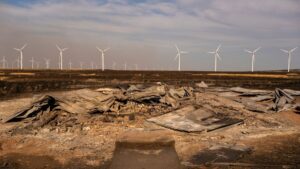
The report notes lots of new wind and solar power has been added to the grid in the past few years, but most has been outside of Washington and Oregon, and it has not been enough to replace the reliability of fossil fuels.
Cost of climate unreliable renewables replace fossil fuel certainty
As coal power plants start to close, utilities are mainly building wind and solar. Most of the capacity across the Northwest, however, has been built in Wyoming and Utah. Coal plants have been retiring across the U.S., due to rising costs, cheaper forms of power and environmental regulations.
A Washington clean-energy law prohibits power from coal after this year. The concerns aren’t news to power planners, who have warned about a power crunch for years, even before data centers needed for streaming, cloud storage and artificial intelligence have increased demand, and the Northwest isn’t alone in these challenges.
Extreme weather events, which are challenging reliability, have also been linked to spiking power prices and increased rates for customers.
The report was created by consulting firm E3, or Energy + Environmental Economics, and was sponsored by the Public Generating Pool and investor owned utilities like Puget Sound Energy, Avista and Portland General Electric.
The analysis found the power reliability gap to be around 1,300 megawatts in 2026, eventually growing to around 8,600 megawatts in 2030. Though, there are around 3,000 megawatts worth of energy projects that will likely come online by 2030. With drought and climate change, hydropower has become more variable and has forced utilities to turn toward fossil fuel for power. During rare winter cold snaps, wind may die down because of a high pressure system, and solar tends to be weak.
Economic whiplash spiking demand and taxpayer burden
All this comes amid “once in a generation” growth in electricity demand, Arne Olson, an E3 senior partner told The Seattle Times.
The forecasts for how fast electricity use will grow have only accelerated each year. Today, energy demand is expected to grow 3.2% a year, driven by population growth, development, increased air conditioning, more electric vehicles and industrial users, like data centers.
Utilities can reduce demand through energy efficiency, but the report states those reductions won’t be enough to offset the increase in electricity demand.
While the Bonneville Power Administration is working to speed up the process for connecting energy projects to the grid, the forecast gap in power falls on the “high end” of possible scenarios.
The report also analyzed the amount of solar, wind and battery projects utilities have said they intend to build by 2030. If all those materialize, that will be just enough to cover the forecast resource gap.
However, given federal changes in clean energy policy as well as labor and supply chain challenges, it’s unlikely those will all be online by 2030.
If a utility is facing a scenario where there is more demand than electricity they can buy or generate themselves, they will implement a rolling blackout turning off the power in neighborhoods on a rotating basis.
The Pacific Northwest came dangerously close to seeing rolling outages around January’s Martin Luther King Jr. Day weekend in 2024.
During that time, the region was importing an average of 4,900 megawatts per hour from California, the Southwest and the Rockies.
The event was exacerbated by a low water year and cold weather, and the system was pushed to its limit as wind power across the Northwest dropped to zero. The tightest moment came when an unexpected outage hit the Jackson Prairie underground gas storage field, the region’s largest natural gas reservoir.
The conditions experienced during that five-day stretch “highlighted a tipping point and demonstrated how close the region is to a resource adequacy crisis,” an assessment of the event by the Western Power Pool told The Seattle Times.
Follow Seattle Red on-air at 770 AM, on the Seattle Red app, and streaming audio and video on SeattleRed.com.
Related
 Clean energy without consent? Washington's rural communities deserve a voice
 'Not even California taxes private security services!': Security giant sues Washington over outrageous new tax
 Here's why Washington's gas prices keep rising: regulation, taxes, and the CCA
 PSE bills could hit $210 a month, and a Republican senator wants to know how much is Olympia’s fault
 Edmonds council unanimously fast-tracks six years of utility hikes as one member warns of ‘incredible sticker shock’
 Sam Cardwell: Congress should act quickly on energy permitting reform

Comments
19 Comments
This is entirely a problem of our own creation. Radical environmentalists within the Democratic party would rather see families living in caves, or better yet, not existing at all. You are the carbon they want to reduce.
Interesting that nothing is said in the article about the left's ongoing effort to get the Snake River hydro dams which supply huge amounts of power in the Eastern region breached. If they ever do succeed in their quest, the Columbia River dams will certainly be next on their wish list and in their sights. And no mention of nuclear power as well. The study and the article are seriously biased and flawed. Typical.
The large democratic centers will suffer the least, with their power walls and arguments that the downtown core needs power to light the dangerous streets and to waste power on the circus of stadiums. They vote harder for less reliable power, fooled into the notion they are doing good but will reap the benefits off of the backs of the rest of the state.