
Seattle Public Schools announce 2026 cellphone ban, board members push back
Seattle Public Schools’ cellphone ban, set to take effect in the 2026–27 school year, faces criticism from the School Board.


Seattle Public Schools' administration building, where district officials placed Ibijoke Idowu on paid leave in December after notifying Seattle Police of alleged child abuse at Rising Star Elementary. (Photo courtesy of KIRO 7)
(Photo courtesy of KIRO 7)
Seattle Public Schools (SPS) officials previewed a new district-wide policy on Wednesday to restrict student cellphone use, a move intended to increase focus and reduce social media stress. Some board members immediately criticized the proposal as an unenforceable “nonpolicy.”
The proposal, which district officials say will be finalized without mandatory School Board approval, marks the first time SPS has signaled intent to enforce limits across all schools. The move aligns with a statewide trend where 75% of Washington districts already restrict phone access.
The policy is scheduled to take effect at the start of the 2026-27 school year.
District goals and restrictions
Associate Superintendent Rocky Torres-Morales presented the plan, hoping this will help students focus more and improve their social skills.
School Board members immediately raised concerns that the vague high school rule is an unfunded mandate that offloads responsibility onto teachers, guaranteeing inconsistent enforcement.
Board Director Evan Briggs called the high school guidelines a “nonpolicy,” stating that different levels of enforcement from class to class.
Board objections and final policy path
“I feel like this does nothing to address the inconsistencies even within school buildings,” School Board Director Evan Briggs said about the policy’s high school guidelines. “Some teachers feel more empowered to enforce this in their classrooms than others. Even from class to class in the same high school, you might have various levels of enforcement, so it essentially amounts to a nonpolicy,” Briggs told The Seattle Times.
Briggs emphasized the burden on educators.
“I’ve spoken to a number of teachers who say we do not want to police these kids, and they shouldn’t have to,” Briggs told The Seattle Times.
Director Liza Rankin also suggested the policy was incomplete, noting it failed to clarify staff phone expectations or outline necessary accommodations for students who use phones for essential learning, such as translation tools.
Concerns over autonomy
While district officials noted that student leaders support the general idea, they also warned the district not to be “overly prescriptive” and to leave enforcement autonomy at the school level.
“One of the things that we heard when we engaged with (student) leadership across the city from all of our high schools is the idea that they support what we’re talking about with cellphones — however, they don’t want us to be overly prescriptive and want to leave some autonomy at the teacher level and school level,” Torres-Morales told The Seattle Times.
Interim Superintendent Fred Podesta highlighted student enthusiasm for the idea.
“They were pretty enthusiastic about it and saw the benefits of it,” Podesta told The Seattle Times.
Despite board objections, district officials plan to move forward, continuing to gather community input before revising or finalizing the policy without a formal board vote, unless the procedures conflict with existing rules.
Follow Seattle Red on-air at 770 AM, on the Seattle Red app, and streaming audio and video on SeattleRed.com.
Related
 Robotics team cleared after $489K political war allegedly targeted Everett school board
 WA school aviation program soars on grants, not local tax levies
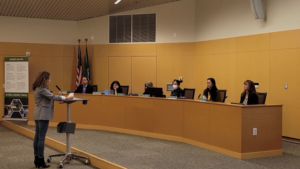 Sedro-Woolley School Board cracks down on disruptive behavior with new civility policy
 Seattle schools were told to close empty buildings nearly 40 years ago, then shelved the audit when neighbors complained
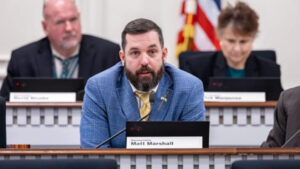 Rep. Matt Marshall says the firm hired to save Washington’s girls’ sports law has been on the wrong side every time
 Girls ask a King County judge to let them defend I-638 after Nick Brown hands it to an outside firm

Comments
0 Comments