
Seattle’s shrinking movie scene takes another hit as Boeing IMAX pulls feature films for 2026
Seattle's Boeing IMAX at Pacific Science Center has paused feature films with no return planned for 2026, as the city continues losing its movie theaters.

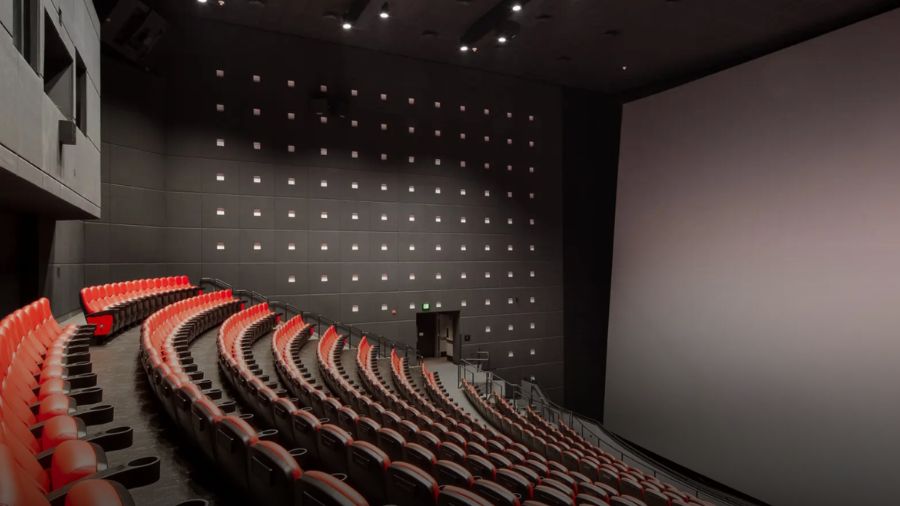
The Boeing IMAX Theater at Pacific Science Center, now operating as IMAX at the Center under Space Needle ownership, has suspended feature film screenings with no return date planned for 2026.(Photo courtesy of RAFN)
(Photo courtesy of RAFN)
Seattle’s Boeing IMAX Theater, the largest movie screen in Washington state, has stopped showing feature films with no plans to bring them back in 2026, the latest sign of a city that keeps losing its places to go.
The 80-foot-wide, six-story screen, rebranded “IMAX at the Center” after the Space Needle purchased a section of the Pacific Science Center for approximately $17 million in March, is closed for renovations. As MyNorthwest reported, the venue will show only IMAX documentaries and content tied to the Chihuly Glass Center. Space Needle spokesperson Amy Cunningham told the Seattle Times the decision was deliberate.
“We maintain the right to offer feature films, but there are no immediate plans to show features in 2026,” she said. “We’re still in the early stages of this partnership and developing IMAX at the Center. The renovations and experience will continue to grow and evolve through the remainder of the year. Our short-term plans are to focus on IMAX documentary films, including ‘Deep Sky’ and ‘Roll the Dice,’ a film that has come together in collaboration with IMAX and Chihuly Studio.” The smaller PACCAR IMAX Theater, still operated by Pacific Science Center, will continue showing feature films.
Pacific Science Center CEO Russell Daugherty addressed why the theater was bundled into the sale. “The economics of operating a movie theater have become increasingly challenging,” he said. “It made sense for PacSci to include the Boeing IMAX Theater in this transaction.” That reasoning, coming from the nonprofit that managed the screen for decades, says more about Seattle’s entertainment climate than any press release will.
Seattle’s movie theaters keep disappearing
The Boeing IMAX development fits a pattern that has been building for years.
The Varsity Theatre, an 80-year anchor in the University District, screened its final films in January of this year, with its operator citing Seattle’s minimum wage requirements, rising utility costs, and shrinking studio release windows as pressures management could no longer absorb; the closure left the U District without a single movie theater. AMC Seattle 10 shuttered in January 2025, and the SIFF Cinema Egyptian on Capitol Hill permanently closed in October 2025 after flood damage made financial recovery impossible.
Amelia Anguirus, social media manager at Scarecrow Video, one of the region’s last remaining video rental stores, spoke to KING 5 after the IMAX announcement.
“We’re not dead yet. But it’s a heavy blow,” she said. “I think it’s really sad because Seattle is supposedly a major city, but it’s just becoming harder and harder to even simply see a movie. If it was just totally going to be empty, I think that would be very upsetting. So it’s good that they’re still doing the documentaries and keeping the door a little bit ajar.”
Can Seattle draw people in anymore?
At what point does Seattle’s street-level environment start directly killing ticket sales?
A homeless encampment has been growing near the Space Needle itself, the same campus that houses both IMAX screens. Downtown Seattle has been hemorrhaging major retailers, restaurants, and regular foot traffic for years as open-air drug use and encampments have made a night out in the city feel like a calculated risk for a lot of residents. When people already have a home theater setup and a streaming library, the case for heading downtown has to be a compelling one. Seattle makes that case harder to accept with each passing month.
Washington Democrats have also shoved compliance mandates onto an already-stressed movie theater industry, requiring costly programming and documentation requirements that put further pressure on a business model already under assault from streaming. High parking costs, one of the country’s highest minimum wage floors, and a downtown environment that increasingly punishes discretionary spending all factor into the math. For a theater to survive, people have to decide the trip is worth what it costs them. In Seattle right now, fewer are making that choice.
Listen to The Jason Rantz Show on weekday afternoons from 3 p.m. – 7 p.m. on Seattle Red on 770 AM (HD Radio 97.3 FM HD-Channel 3). Subscribe to the podcast here. Follow Jason Rantz on X, Instagram, YouTube, and Facebook.
Related
 Washington's $1.20 gas premium: Republican demands Ferguson suspend climate law now
 WA-03 is now a Toss-up: Gluesenkamp Perez hemorrhages base support as her numbers crater
 Bob Ferguson's $100M police hiring promise only produced 45 officers and a lot of red tape
 Seattle high school allegedly warns students not to skip class as Grand Theft Auto VI finally hits consoles
 King County lost 12.4% of its information jobs since 2022, and Seattle’s payroll tax budget is exposed
 Two weeks after voters kept Washington’s income tax, Jamie Pedersen is already pitching a new one on businesses

Comments
0 Comments