
Two Washington renter protection plans that will raise your rent, expert warns
Seattle's junk fee ban and Spokane's cooling mandate both skip building new units and push costs onto renters, a landlord group warns.

A Rental Housing Association of Washington official says renter protection proposals in Seattle and Spokane will drive costs higher rather than lower. (Photo: Joe Raedle, Getty Images)
(Photo: Joe Raedle, Getty Images)
Two Washington cities are pushing renter protection proposals that would raise housing costs instead of lowering them, according to the advocacy director for a group representing 6,000 property owners statewide.
In Seattle, Mayor Katie Wilson wants to ban a list of so-called junk fees while leaving a shorter menu of charges landlords may still collect. In Spokane, the city council is set to vote next week on a cooling mandate that would require air conditioning in every bedroom.
Neither plan produces a single new unit, and both would shift fresh costs onto tenants. Kevin Schilling, Government Affairs and Advocacy Director for the Rental Housing Association of Washington, is fighting both measures. He argues the fees Seattle wants to prohibit will simply reappear inside base rent.
Seattle’s junk fee ban just moves the money
Wilson’s proposal creates a list of permitted fees and bans everything else, prohibiting separate charges for pet rent, mail service, in-unit appliances, and common area access, according to MyNorthwest. The mayor has already conceded the costs would likely fold into base rent.
“We’re just saying every individualized service charge goes away, and we can’t charge people for their individual usage of something, so it’s all going to be baked into a collective fee or collective rent increase,” Schilling explained on The Jason Rantz Show on Seattle Red 770 AM.
That bundling forces renters who never use a service to subsidize the ones who do, a point Rantz has made repeatedly. Schilling warned the change hits the smallest operators hardest.
“It’s going to hurt the local community-based wealth invested small landlords, and folks who keep two people in a duplex, couple families in a triplex, it’s going to hurt them the most because they don’t have any tools in order to kind of have equity within the system,” he said. “It’s just going to make it easier for the big corporate-backed guys to be the ones that can handle navigating this process and navigating the increased regulatory environment.”
Spokane’s cooling mandate and the 72-hour window
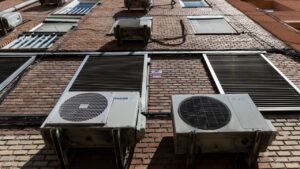
The Spokane council will take up a right-to-cooling ordinance that gives tenants a 72-hour compliance window. Schilling said housing providers share the goal of keeping residents safe after a heat wave killed roughly 20 older tenants in units without air conditioning a couple years ago, though he called the mandate unworkable for aging buildings.
“This ordinance goes a bit too far with mandates and implementation requirements that would require every landlord to put an air conditioning unit into every bedroom, and it would allow tenants to say someone’s not meeting that requirement within 72 hours, and then the housing provider would be out of compliance,” he said.
Retrofit costs stack up fast on pre-1980 housing. “It costs a lot of money to put a brand new air conditioning unit in an older building. You got to retrofit it, you got to hire HVAC, you got to connect to utility services,” he said. He pointed to a new state law, effective this June, that already lets tenants install a cooling device of their choosing, and said Spokane should let it work before imposing an immediate mandate.
What happens when landlords sell
Schilling tied both proposals to the state’s 2025 rent cap, describing a loop where each new rule triggers the next. The end result, he warned, is fewer rentals, not cheaper ones.
“With an increase of burdensome regulation, all we are doing is hurting the small landlords, the small housing providers, and sooner or later they’re going to decide they can’t maintain units within this regulatory environment, and they’re going to have to sell their units and go off the market,” he said.
That contraction comes as Washington’s housing supply is already swelling, with inventory up more than 16% in June amid an income tax exodus. Schilling argued rents drift down naturally where cities allow more building, and that piling mandates on small operators threatens the one trend actually helping renters.
Listen to The Jason Rantz Show on weekday afternoons from 3 p.m. – 7 p.m. on Seattle Red on 770 AM (HD Radio 97.3 FM HD-Channel 3). Subscribe to the podcast here. Follow Jason Rantz on X, Instagram, YouTube, and Facebook.
Related
 Lawsuit says Highline told Christian student she could share opinions, not religious beliefs
 Rantz: Washington spent $6.2 million on I-90 wildlife bridge for one bear to cross in 8 years
 Spokane council to vote on ordinance forcing landlords to cool rentals to 80 degrees
 King County brags about 48-day permits while its auditor says the county can’t reliably measure how long they take
 Millionaires renting jumps 709%, suggests Seattle real estate isn’t worth the price
 Socialist mayors to lead LA, D.C., NYC, Seattle as Trump warns of ‘disaster’
Comments
1 Comments
I can’t wait to sell my rental. I’m going to take the money and invest in an out of state vacation home. It will be my “primary” residence. Good work Washington and I am not alone.