
Chris Cargill: Who’s getting the Idaho parental choice tax credit – and why is the application window reopening?
Over 6,000 Idaho families applied for the parental choice tax credit, proving strong demand across diverse income levels for education.

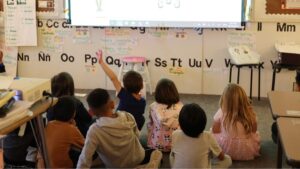
Working-class families drive Idaho's school choice participation. (Photo: Michael Nguyen/NurPhoto via Getty Images)
(Photo: Michael Nguyen/NurPhoto via Getty Images)
When Idaho opened applications for the new parental choice tax credit, families responded. By the close of the initial application window, 6,069 families had applied, covering 10,809 students. That’s not a small or narrow response—it’s participation on the scale of one of Idaho’s largest school districts. But the most important story isn’t just how many families applied. It’s who they are.
Early data obtained by MSPC shows that nearly half of participating families are lower-income or working-class. That matters. And it tells us something important about how this program is actually being used. For months, debates over the parental choice tax credit focused on what might happen. Would families apply? Would the program expand access, or simply benefit those who already had options?
Now we know. Thousands of Idaho families didn’t wait for the debate to settle. They acted. And many of them are the very families who are most sensitive to cost. For working-class households, even modest financial support can make a meaningful difference—whether that means tutoring for a struggling student, access to specialized instruction, or the ability to consider new schooling options.
Idaho’s program was built around that idea. It provides up to $5,000 per student, and the support goes directly to parents, allowing families to decide how best to use it.
Challenging assumptions on school choice
The early results suggest that approach is working. When nearly half of the families using the credit are lower-income or working class, it challenges a long-standing assumption—that programs like this primarily serve those who already have resources. The data suggests otherwise. This isn’t just about expanding options in theory. It’s about families across income levels choosing to use those options in practice.
There’s another important development. Even with strong participation, some $7 million in funds remain available. As a result, the Idaho State Tax Commission plans to reopen the application window soon, giving more families a chance to participate.
That creates an opportunity—not just to increase participation, but to reach families who may not have been aware of the program the first time around.
Reshaping the conversation on school choice
If the first round of applications is any indication, the next round could be even broader. It’s easy to debate education policy in the abstract. It’s harder to ignore what happens when families respond in real numbers.
The parental choice tax credit has now moved beyond speculation. It has produced real participation from real families—and across a wider range of income levels than many expected.
That doesn’t end the conversation about school choice. But it should reshape it. The question is no longer whether families will use programs like this. They already have.
A significant shift in access
And as the program moves forward, the evidence suggests that the benefits are reaching further—and more broadly—than critics predicted
In the end, the numbers tell a simple story. More than 6,000 Idaho families chose to apply. More than 10,500 students are now represented. And nearly half of those families come from lower-income or working-class backgrounds.
That’s not just participation. That’s a shift in who has access—and who is choosing to use it.
Chris Cargill is the President of Mountain States Policy Center, an independent free market think tank based in Idaho, Montana, Wyoming and Eastern Washington. Online at mountainstatespolicy.org.
Follow Seattle Red on-air at 770 AM, on the Seattle Red app, and streaming audio and video on SeattleRed.com.
Related
 Jason Mercier: Washington's credit outlook turns negative, while Montana and Idaho receive high praise
 ACLU sues to block Idaho's transgender bathroom bill before July 1 criminal penalties kick in
 Chris Cargill: They say Idaho spends the least per student... does it really matter?
 Idaho moves to ensure justice for victims with new firing squad primary method
 Cargill: Washington’s $4 billion budget gap proves Olympia has a spending problem
 Chris Cargill: First report on Idaho ed choice tax credit shows program a monumental success
Comments
0 Comments