
Why a gas tax holiday won’t lower Seattle’s $5.25 gas prices
Seattle gas prices top $5.25 a gallon — but a national gas tax holiday would save most drivers less than 0.1%, a federal budget expert warns.

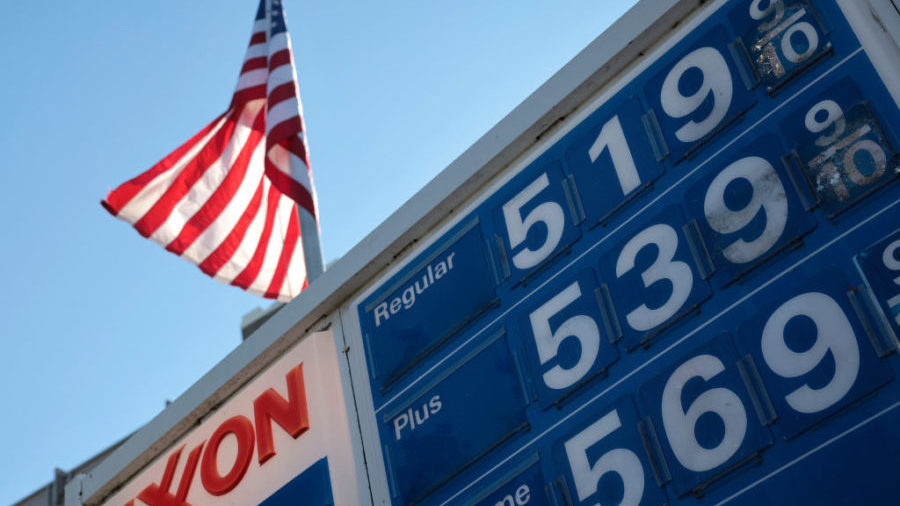
Gas tax holidays offer more cost than relief. (Photo by Win McNamee/Getty Images)
(Photo by Win McNamee/Getty Images)
As gas prices soar past $5.25 in Seattle, the debate over a “gas tax holiday” is gaining momentum. While the idea of temporary relief at the pump sounds like a win for struggling families, one expert warns that the actual savings might be illusory, at least at the national level.
Mark Goldwein, Senior Vice President and Senior Policy Director for the Committee for a Responsible Federal Budget, warns that cutting the gas tax is not the quick fix many people hope for.
Why the 18-cent federal gas tax cut won’t reach drivers at the pump
“It says it’s going to cost the government a lot of money, but not save people very much at the pump,” Goldwein told The Jason Rantz Show on Seattle Red 770 AM. He was referring to a national gas tax holiday.
He noted that the federal gas tax is only 18 cents per gallon. Even if that were completely suspended, drivers wouldn’t see the full 18-cent drop. Goldwein argues that gas stations and oil companies would likely respond by raising their prices to meet high demand. Between that and general inflationary pressure, he estimates the actual reduction in out-of-pocket costs for most people would be 0.1%.
Jones Act and global oil markets are the real drivers of high Seattle gas prices
Goldwein suggested that the gas tax is becoming an outdated way to fund roads as cars become more fuel-efficient and use of electric vehicles (EVs) grows. He noted that if states use a tax holiday to transition toward a “vehicle mileage tax,” it might make sense, but as a temporary fix, it fails to address the root causes of high prices.
“A lot of the regulatory environment makes, for example, things like the Jones Act… difficult to kind of trade between the U.S. and other countries, even when we’re close to each other. These kinds of things just drive up the price of oil more than it otherwise would have to be,” Goldwein said.
He pointed to global issues and local rules are the real reasons for high costs. One example is the Jones Act, a law that says only American-made ships can carry goods between U.S. ports, which makes things more expensive. Even though the U.S. is planning to produce more oil at home, the global market and uncertain prices mean Seattle drivers will likely keep feeling the squeeze at the pump.
Listen to The Jason Rantz Show on weekday afternoons from 3 p.m. – 7 p.m. on Seattle Red on 770 AM (HD Radio 97.3 FM HD-Channel 3). Subscribe to the podcast here. Follow Jason Rantz on X, Instagram, YouTube, and Facebook.
Related
 Republicans file federal lawsuit over Oregon gas tax 'pay-to-play' vote rules
 Brandi Kruse wins public records appeal against the City of Seattle
 Everett wants $5 million for a new housing fund. Where will it go?
 Downtown Seattle condo losses pile up after voters keep Ferguson’s income tax and buyers walk to cheaper units
 Skip Black Friday: Saturday has the deepest online discounts, but Seattle’s sales tax eats nearly a quarter of your coupon
 Spokane Mayor Lisa Brown wants more of your sales, property and utility tax dollars to patch the city’s budget hole

Comments
5 Comments
Is there a practical difference? Just looking at the local roads, I'd have to conclude not.
Of course there is no difference, just semantics. The state decides they need to FORCE everyone off the roads and into mass transit and this is just one way to make it too expensive to drive or own a POV.
"Our national problems usually do not cause nearly as much harm as the solutions." —Thomas Sowell
And state politicians double-down.