
Washington bucks national trend by taxing gold and silver
Washington remains one of few states taxing gold and silver as most of the country repeals precious metals taxes to keep savings and business in-state.


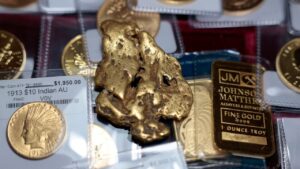
A gold nugget rests atop gold coins as prices surged past $4,000 an ounce in October 2025, highlighting the growing investor demand for precious metals even as some states, including Washington, continue to tax gold purchases.(Photo Illustration by Justin Sullivan/Getty Images)
(Photo Illustration by Justin Sullivan/Getty Images)
Washington is an outlier when it comes to taxing precious metals, as most states across the country move in the opposite direction by repealing or rolling back sales taxes on gold and silver.
More than 40 states now fully or partially exempt precious metals from sales tax. In recent years, states including Ohio, Kentucky, West Virginia, and Wyoming have eliminated these taxes altogether, citing concerns about capital flight, lost local business revenue, and the role gold and silver play as long-term stores of value rather than consumer goods.
Lawmakers in those states argued that taxing precious metals discourages savings, pushes buyers to neighboring states, and harms small, locally owned coin shops without generating meaningful revenue. Several repeal efforts were backed by state revenue analyses showing that sales tax collections from bullion were minimal compared to the economic activity lost when buyers took their business elsewhere.
Washington is a ‘tax gold’ outlier
Washington, by contrast, continues to tax gold and silver purchases, placing it among a shrinking minority of states that still treat precious metals like taxable retail products. Critics say that policy choice puts Washington at a competitive disadvantage, particularly in the Pacific Northwest, where residents already cross state lines to avoid fuel, grocery, and business taxes.
Supporters of repeal in other states also pointed to inflation concerns, noting that gold and silver are often purchased as a hedge against rising prices and currency risk. Taxing those purchases, they argued, effectively penalizes financial caution at a time of economic uncertainty.
As Washington lawmakers debate revenue priorities during the 2026 legislative session in Olympia, the state’s position on precious metals stands in growing contrast to national trends favoring tax relief and capital retention.
Follow Seattle Red on-air at 770 AM, on the Seattle Red app, and streaming audio and video on SeattleRed.com.
Related
 Washington Democrats slap new tax on gold and silver starting Jan 1, coin shops warn of fallout
 Rantz: Cops invited to flee Seattle as city appears to revive failed drug diversion policy
 Rantz: Fired judge reinstated after claiming criticism of her abusive personality was racism
 King County lost 12.4% of its information jobs since 2022, and Seattle’s payroll tax budget is exposed
 A year after fencing off pothole money for the World Cup, Seattle’s council keeps a 29% cut in play
 Two weeks after voters kept Washington’s income tax, Jamie Pedersen is already pitching a new one on businesses

Comments
1 Comments
Took me out of my 40-year coin collecting hobby not to mention silver/gold/platinum buillion purchases. Can't compete in coin/currency auctions due to the 10% premium I have to pay above any winning bid while bidders from all but 3 other states pay nothing. A few years ago I was taken out of actively bidding on banknotes for the same reason. I'm sure Costco sales are taking a big hit not to mention the smaller mom and pop coin shops. It's cheaper to drive to ID or OR and purchase bullion once a year. I can make a trip with 10% saved on sales tax paying for a nice overnight trip with lodging, dinner, gasoline and a couple hundred bucks left over for good measure. No brainer.