
Washington clean-air rules stall cremation upgrades, leaving funeral homes stuck with polluting machines
Washington’s clean-air rules stall new cremation machines, forcing funeral homes to rely on polluting equipment.

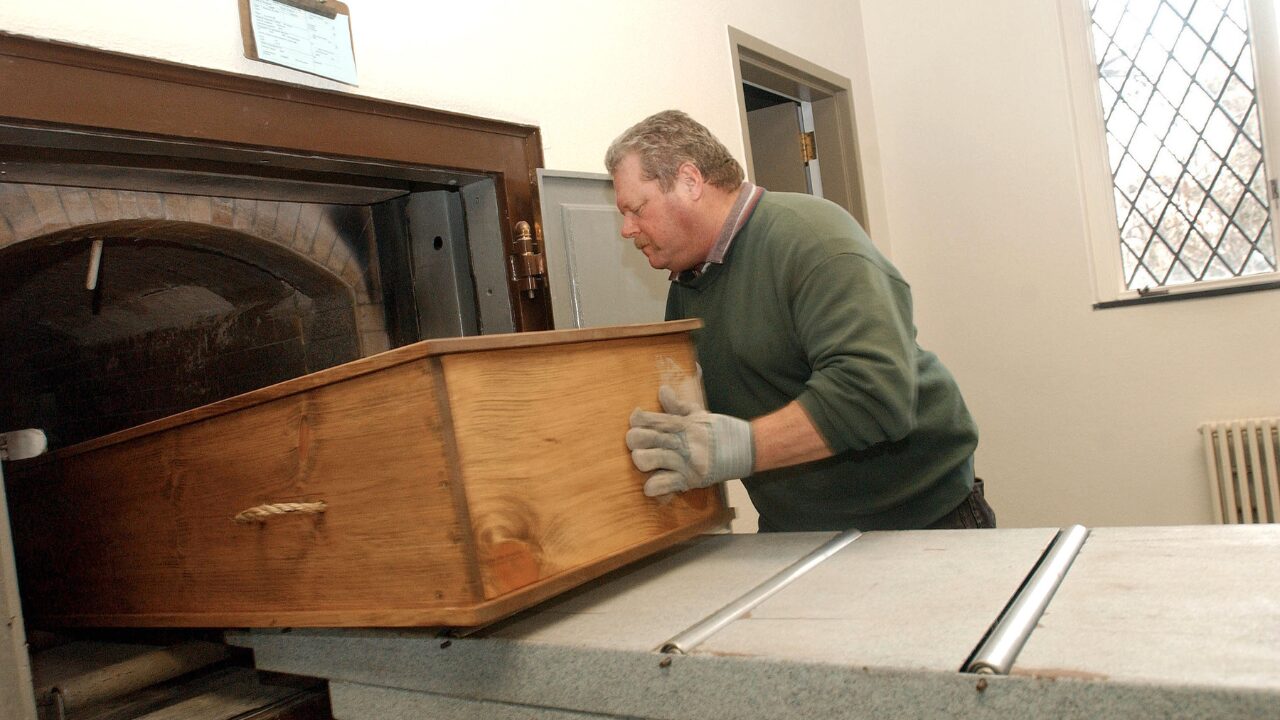
Washington rules stall cremation upgrades, funeral homes face crisis. (Photo by Darren McCollester/Getty Images)
(Photo by Darren McCollester/Getty Images)
The pursuit of cleaner air in Washington State has led to an unintended crisis for the funeral industry, forcing crematories to rely on older, less-efficient machines while modern, low-emissions replacements are effectively blocked by a permitting delay.
First reported by The Seattle Times, the regulatory issue centers on funeral home owners like Bryan Lorentzen. Lorentzen, who owns Solie Funeral Home in Everett, purchased a top-of-the-line, fuel‑efficient cremation machine in 2022. Two years later, the modern unit still sits unused as he waits for a clean‑air permit.
In the mean time, Lorentzen must rely on his 25-year-old machine—a model he suspects is a greater source of pollution. His dilemma shows a larger regional problem. With nearly 80% of Washington residents choosing cremation in 2024, funeral directors warn that permit delays are making it harder to keep up.
Why newer machines are being blocked
The problem stems from updated clean-air regulations, which are written by the state Department of Ecology and enforced by the Puget Sound Clean Air Agency (PSCAA). These stricter regulations apply only to new machines, while older equipment permitted decades ago is simply “grandfathered in” and allowed to run as long as it works.
“Washington could become like Cuba, you’ll have a bunch of old vehicles and nobody’s able to upgrade,” Corey Gaffney, a fourth-generation funeral director in Tacoma, told The Seattle Times.
Even when new permits are issued, they are often severely restricted. Newer models are dramatically faster, reducing cremation time from 2 to 4 hours down to 60 to 90 minutes, which saves natural gas and lowers emissions.
The pollutant mystery
The primary chemical holding up the process is hexavalent chromium, a known carcinogen that has drawn intense scrutiny from regulators in recent years.
The difficulty is that experts don’t know where the pollutant comes from. John Dawson, an engineering manager at PSCAA, suggests one leading theory; the chemical may not be produced by the machines at all, but instead is coming from the bodies being cremated—the bioaccumulation of a lifetime going up in smoke.
This means new rules are trying to control a pollutant that may be inside us, and those rules only punish those trying to bring newer, cleaner technology online.
A dangerous incentive and capacity shortage
Funeral directors say this regulatory structure creates two major problems. First, an incentive structure that encourages funeral homes to keep pushing their old, inefficient machines. Second, the region might run out of room to cremate the dead.
Only about a quarter of the roughly 90 funeral providers in King, Pierce, and Snohomish counties have their own machines. Capacity dropped further in July when Columbia Funeral Home in Seattle—which had a machine permitted before the new rules—closed its crematory after an arson fire, choosing to sell the property instead of rebuilding.
Casey Husseman Brandt, executive director of the funeral consumer advocacy group People’s Memorial Association, has been trying to raise the alarm with regulatory boards.
“Nothing has changed as far as I can tell,” Husseman Brandt said, according to The Seattle Times, describing the situation as a “powder keg” of building pressure.
Follow Seattle Red on-air at 770 AM, on the Seattle Red app, and streaming audio and video on SeattleRed.com.
Related
 Trump administration ensures Pete Serrano continues leading eastern Washington U.S. Attorney's office
 'Millionaire tax' in Washington to fix 2026 budget shortfall sparks concerns over small business impact
 Seattle ranks in surprising spot for two‑parent households
 Seattle already blew past its $800,000 break-in repair baseline, and the council wants another $1 million
 Seattle high school allegedly warns students not to skip class as Grand Theft Auto VI finally hits consoles
 King County lost 12.4% of its information jobs since 2022, and Seattle’s payroll tax budget is exposed

Comments
0 Comments